
Peptides COA – Complete Guide to Peptide Certificates of Analysis & Quality Testing
What Is a Peptides COA?
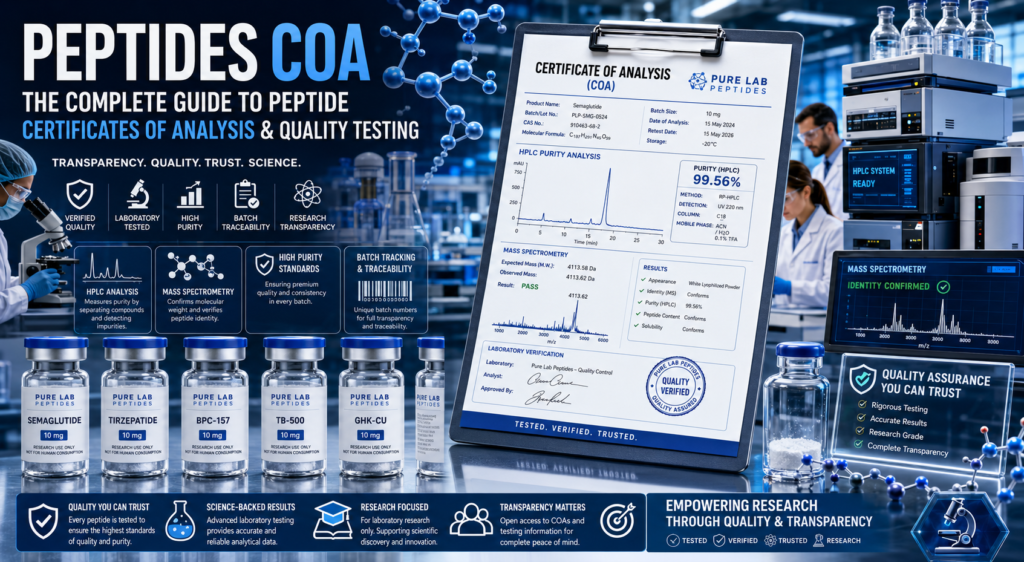
As peptide research continues growing in popularity, researchers are paying closer attention to product quality, transparency, and laboratory verification. One of the most important documents associated with peptide products is the Certificate of Analysis, commonly referred to as a COA. Understanding what a peptides COA is and why it matters can help researchers make more informed decisions when evaluating peptide products and research suppliers. Peptides COA
A Certificate of Analysis is a laboratory document that provides detailed information about a specific peptide batch. It is designed to verify important characteristics of a product, including identity, purity, testing methods, and quality-control results. In simple terms, a COA serves as evidence that a peptide has undergone analytical testing and that the results have been documented for review. Peptides COA
As demand for peptides continues increasing across the UK and Europe, Certificates of Analysis have become one of the most important tools for promoting transparency within the peptide industry. Researchers often request COAs because they provide insight into how a product was tested and whether it meets expected quality standards. Peptides COA
Understanding Certificates of Analysis
A Certificate of Analysis is generated after laboratory testing has been completed on a peptide batch. The document typically contains information that helps confirm the product’s identity and provides data regarding purity and testing procedures. Peptides COA
The primary purpose of a COA is to offer transparency. Rather than relying solely on product descriptions or marketing materials, researchers can review actual laboratory results that provide objective information about the tested peptide. This helps create greater confidence when evaluating peptide products for research purposes.
Many reputable peptide suppliers recognize the importance of providing Certificates of Analysis because they demonstrate a commitment to quality assurance and scientific transparency.
What Information Is Included in a COA?
Although the exact format may vary between laboratories, most peptide COAs contain several important pieces of information. These commonly include the product name, batch number, testing date, analytical methods used, purity results, and laboratory identification details.
Researchers often review batch information to confirm that the COA corresponds to the specific product they are evaluating. Testing dates help verify when the analysis was performed, while laboratory information provides additional transparency regarding the source of the testing.
Purity results are usually among the most closely examined sections of a COA because they provide information about the concentration of the target peptide relative to any detectable impurities.
Why Researchers Request COAs
Researchers frequently request Certificates of Analysis because they help verify product quality and support greater confidence in research materials. A COA provides an additional layer of transparency that goes beyond basic product descriptions.
By reviewing laboratory data, researchers can better understand the characteristics of a peptide batch and evaluate whether it aligns with their research requirements. This emphasis on quality verification has become increasingly important as the peptide industry continues to expand.
Certificates of Analysis also help support consistency across research projects by providing documented analytical results that can be referenced when comparing different peptide batches.
COAs vs Product Descriptions
A common misconception is that a product description provides the same information as a Certificate of Analysis. In reality, these documents serve very different purposes.
Product descriptions are designed to provide general information about a peptide, including its category, characteristics, and areas of scientific interest. A COA, however, is a laboratory-generated document that contains analytical testing results specific to an individual batch.
Both documents are valuable, but they work together rather than replacing one another. Product descriptions provide educational context, while Certificates of Analysis provide technical verification and quality-related data.
As peptide research continues advancing, understanding the role of Certificates of Analysis remains essential for researchers seeking transparency, quality assurance, and confidence in peptide-related investigations.
Why COAs Matter for Peptide Research
Certificates of Analysis play a critical role in modern peptide research because they provide documented evidence regarding product identity, purity, and laboratory testing results. As the peptide industry continues expanding, researchers are placing greater emphasis on transparency and quality assurance when evaluating research materials. A COA serves as one of the most valuable tools for supporting these objectives.
Without laboratory verification, it can be difficult to determine whether a peptide product matches its intended specifications. Certificates of Analysis help bridge this gap by providing analytical data that researchers can review before selecting products for their investigations. Peptides COA
The growing importance of peptide quality has made COAs a standard expectation among many researchers seeking reliable peptide products and trustworthy suppliers.
Confirming Peptide Identity
One of the primary functions of a Certificate of Analysis is to help confirm peptide identity. Laboratory testing methods such as mass spectrometry are commonly used to verify that the molecular characteristics of a peptide match the intended compound. Peptides COA
Identity verification is particularly important because even minor differences in molecular composition can affect research outcomes. Researchers rely on analytical testing to ensure they are studying the correct peptide rather than an unintended substance or manufacturing byproduct.
A verified peptide identity provides a stronger foundation for scientific investigations and supports confidence in research materials.
Measuring Peptide Purity
Purity is one of the most frequently discussed aspects of a peptide COA. Purity testing helps determine the percentage of the target peptide present within a sample relative to impurities or residual manufacturing compounds. Peptides COA
Many peptide products are evaluated using High-Performance Liquid Chromatography (HPLC), which allows laboratories to assess purity levels and identify potential impurities. Researchers often review purity results closely because they provide insight into the overall quality and consistency of a peptide batch.
Higher purity levels are generally associated with greater confidence in laboratory research, making purity testing one of the most important components of a Certificate of Analysis.
Supporting Research Consistency
Consistency is essential in scientific research. Researchers often seek products that provide reliable and reproducible results across multiple studies or experimental conditions. Certificates of Analysis support this goal by documenting analytical results for individual peptide batches.
By reviewing batch-specific testing data, researchers can better understand product characteristics and compare results across different production lots. This level of documentation can help support research reproducibility and improve confidence in experimental observations.
As peptide science continues advancing, batch-to-batch consistency remains a key factor influencing supplier selection and product evaluation.
Building Trust Through Transparency
Transparency has become one of the defining characteristics of reputable peptide suppliers. Certificates of Analysis contribute significantly to transparency because they provide independently generated laboratory information that can be reviewed by researchers.
Rather than relying solely on marketing claims, researchers can examine documented analytical results and gain a clearer understanding of product quality. This openness helps strengthen trust between suppliers and the scientific community. Peptides COA
As demand for peptide products continues increasing, transparency is likely to become even more important. Suppliers that provide clear documentation and accessible quality information are often viewed more favorably by researchers seeking reliable peptide products. Peptides COA
Ultimately, Certificates of Analysis serve as an important link between laboratory testing and research confidence, helping support informed decision-making throughout the peptide industry.
Understanding Peptide Purity Testing
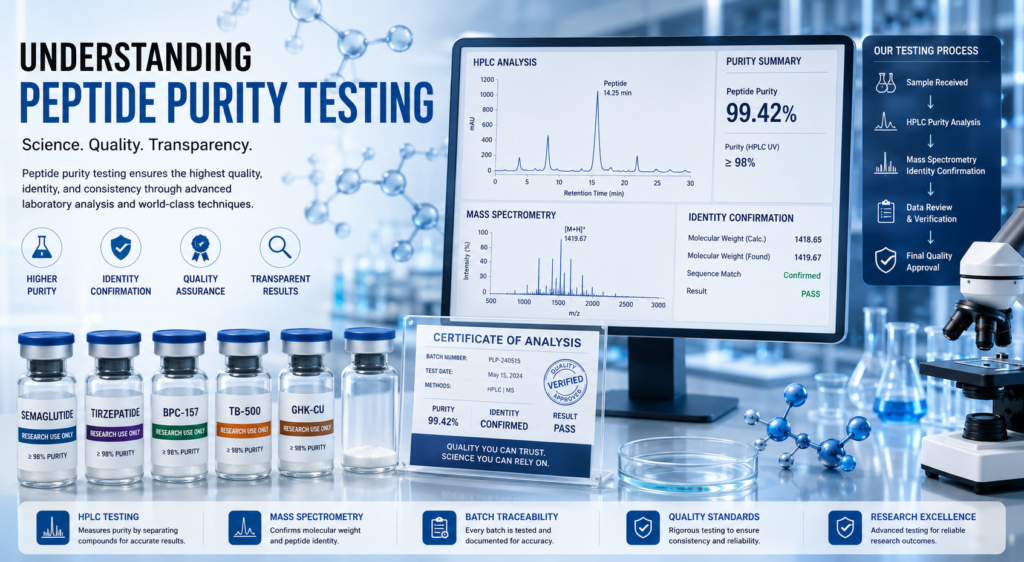
Peptide purity testing is one of the most important aspects of quality assurance within the peptide industry. Researchers often rely on purity data to evaluate the quality, consistency, and analytical characteristics of peptide products before incorporating them into research projects.
Purity testing helps determine how much of a sample consists of the intended peptide compared to impurities, residual compounds, or manufacturing byproducts. The results are typically documented within a Certificate of Analysis and provide valuable insight into the overall quality profile of a peptide batch.
As peptide science continues expanding, purity testing has become a standard component of modern quality-control procedures and is widely regarded as one of the most important sections of a peptide COA.
What Purity Means
In peptide research, purity refers to the percentage of a sample that consists of the intended target peptide. For example, if a peptide is reported as 99% pure, it means that approximately 99% of the analyzed material corresponds to the target compound, while the remaining percentage may consist of impurities or related substances.
Purity percentages provide researchers with a standardized way to assess product quality and compare different peptide batches. Although purity alone does not guarantee research outcomes, it remains one of the most widely used indicators of product consistency and analytical quality.
Because purity data is easy to understand and compare, it often becomes one of the first areas researchers review when examining a Certificate of Analysis.
HPLC Testing Explained
High-Performance Liquid Chromatography, commonly known as HPLC, is one of the most frequently used methods for evaluating peptide purity. This analytical technique separates compounds within a sample and allows laboratories to measure the relative concentration of the target peptide compared to any detectable impurities.
HPLC testing produces chromatograms that display peaks corresponding to different compounds within the sample. Analysts use these results to calculate purity percentages and identify the presence of unwanted substances.
Because of its accuracy and reliability, HPLC has become one of the most widely accepted testing methods within the peptide industry and is commonly referenced on Certificates of Analysis.
Mass Spectrometry Testing
Mass spectrometry is another important analytical technique frequently used in peptide testing. While HPLC focuses primarily on purity assessment, mass spectrometry helps verify molecular identity by measuring the molecular weight of a compound.
This testing method allows laboratories to confirm that a peptide’s molecular structure aligns with expected specifications. Researchers often view mass spectrometry results as an important complement to HPLC testing because the two methods provide different types of information.
Together, HPLC and mass spectrometry form the foundation of many peptide quality-control programs and are among the most common analytical methods referenced within peptide COAs.
Additional Quality Assessments
In addition to HPLC and mass spectrometry, some laboratories may perform additional quality assessments depending on the peptide and testing requirements. These evaluations can include stability studies, moisture-content analysis, appearance verification, and other analytical procedures designed to support product quality.
The specific tests included within a Certificate of Analysis may vary depending on the laboratory, peptide type, and quality-control protocols being followed. However, the overall goal remains the same: providing researchers with reliable information regarding the characteristics of a peptide batch.
As peptide research continues growing in popularity, purity testing and laboratory verification will remain essential components of quality assurance. Understanding these testing methods helps researchers interpret COAs more effectively and make better-informed decisions when evaluating peptide products.
Key Sections Found on a Peptide COA
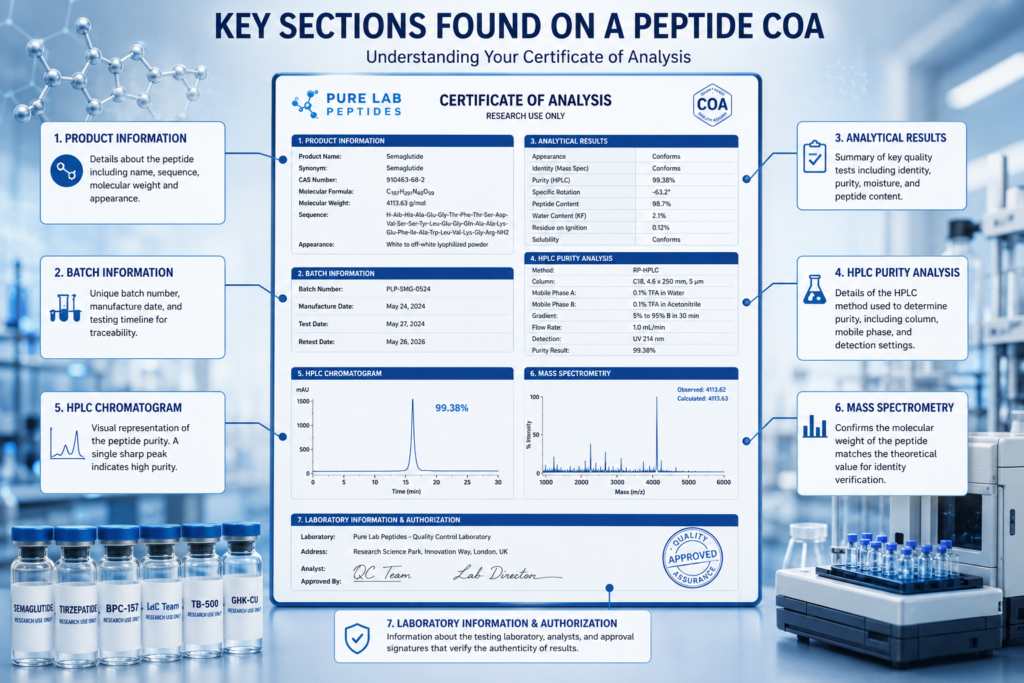
Although Certificates of Analysis may vary slightly depending on the laboratory performing the testing, most peptide COAs contain a core set of sections designed to provide researchers with important quality and analytical information. Understanding these sections can help researchers interpret laboratory results more effectively and evaluate peptide products with greater confidence.
Each section of a COA contributes to the overall transparency of the document by providing specific information regarding product identity, testing procedures, purity results, and batch verification. Learning how to read these sections is an important step toward understanding peptide quality documentation.
Product Name & Batch Information
One of the first sections researchers typically review is the product identification area. This section usually includes the peptide name, batch number, lot number, and sometimes additional product-reference information.
Batch numbers are especially important because they link the Certificate of Analysis to a specific production run. This allows researchers to verify that the COA corresponds directly to the product they are evaluating.
Batch tracking also supports consistency by helping suppliers and researchers identify differences between production lots if additional testing or verification is required.
Purity Results
Purity results are often considered the most important section of a peptide COA. These results provide information regarding the percentage of the sample that consists of the intended peptide compound.
Purity data is typically generated through analytical techniques such as High-Performance Liquid Chromatography (HPLC). Researchers frequently use these results to assess overall product quality and compare peptide batches.
Because purity directly influences quality evaluation, it remains one of the most closely examined components of a Certificate of Analysis.
Testing Methodology
A COA generally includes information regarding the analytical methods used during testing. This section may reference techniques such as HPLC, mass spectrometry, or other laboratory procedures employed to evaluate the peptide.
Understanding testing methodology helps researchers interpret results more accurately and provides insight into how conclusions regarding purity and identity were reached.
Transparent documentation of testing methods is considered an important aspect of quality assurance because it allows researchers to better understand the analytical processes behind the reported results.
Date of Analysis
The analysis date indicates when laboratory testing was performed. Researchers often review this information to ensure the COA reflects current testing data and corresponds appropriately to the product batch being evaluated.
Recent analysis dates can provide additional confidence that testing information remains relevant and accurately represents the peptide batch associated with the certificate.
Including testing dates also supports traceability and quality-control documentation.
Laboratory Verification
Most Certificates of Analysis contain information identifying the laboratory responsible for conducting the testing. This may include laboratory names, analyst information, verification signatures, or other forms of quality-control documentation.
Laboratory verification helps strengthen confidence in the testing process by demonstrating that the analytical results were generated through documented procedures rather than unsupported claims.
Researchers often view laboratory verification as an important component of overall transparency within the peptide industry.
Certificate Reference Numbers
Many COAs also contain unique certificate numbers or reference identifiers. These numbers help distinguish individual certificates and provide an additional layer of traceability.
Reference numbers may be used for recordkeeping, batch verification, quality audits, or future documentation requests. They help ensure that each Certificate of Analysis can be uniquely identified and linked to a specific product batch.
As peptide research continues expanding, understanding these key sections allows researchers to evaluate Certificates of Analysis more effectively and make more informed decisions when reviewing peptide quality documentation.
Common COA Testing Methods
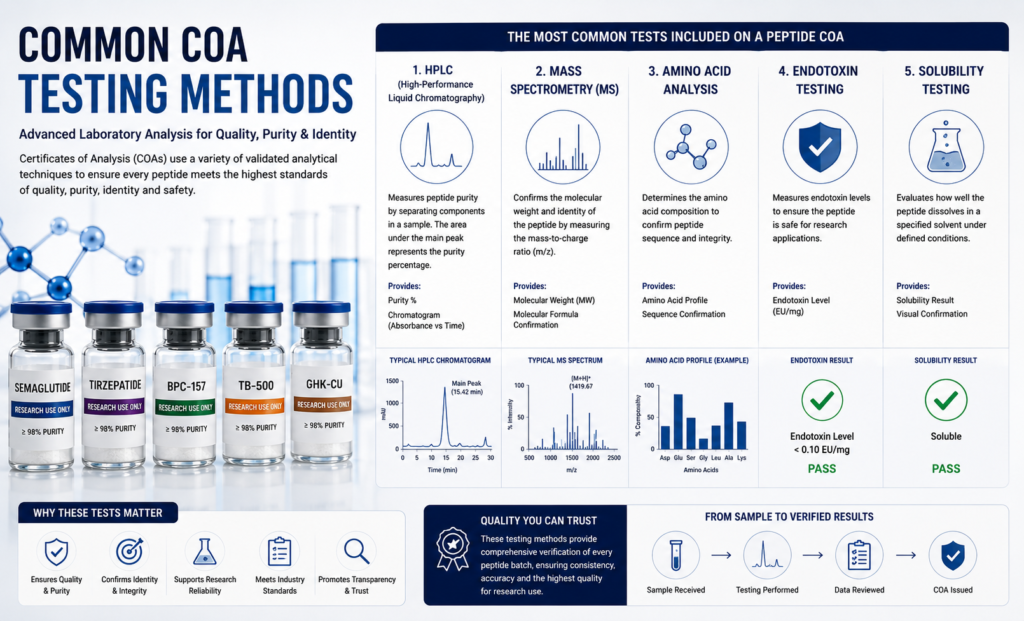
Certificates of Analysis rely on laboratory testing procedures to verify peptide quality, purity, and identity. These analytical methods provide researchers with objective data that helps support confidence in peptide products and their associated documentation.
Several testing techniques are commonly used throughout the peptide industry. Each method provides unique information regarding product characteristics, and many laboratories combine multiple testing approaches to create a more comprehensive quality profile.
Understanding these testing methods can help researchers interpret Certificates of Analysis more effectively and better evaluate peptide products before incorporating them into research projects.
HPLC Analysis
High-Performance Liquid Chromatography (HPLC) is one of the most widely used analytical techniques in peptide testing. HPLC helps laboratories determine peptide purity by separating different compounds within a sample and measuring their relative concentrations.
The results are typically displayed as chromatograms containing peaks that correspond to specific compounds. Analysts use these chromatograms to calculate purity percentages and identify potential impurities present within the sample.
Because HPLC provides detailed purity information, it has become the industry standard for peptide purity assessment and is commonly referenced on Certificates of Analysis.
Researchers frequently consider HPLC results one of the most important components of a peptide COA because they provide direct insight into product quality and consistency.
Mass Spectrometry
Mass spectrometry is another key testing method frequently used in peptide analysis. Unlike HPLC, which primarily focuses on purity, mass spectrometry is used to verify molecular identity. Peptides COA
This analytical technique measures the molecular weight of a peptide and compares the results against expected specifications. By confirming molecular characteristics, laboratories can help verify that the product corresponds to the intended peptide sequence. Peptides COA
Mass spectrometry provides an additional layer of quality assurance and is often used alongside HPLC to create a more complete analytical profile for peptide products. Peptides COA
Together, these two methods form the foundation of many peptide quality-control programs.
Analytical Testing Procedures
Beyond HPLC and mass spectrometry, laboratories may utilize additional analytical procedures depending on the peptide being tested and the quality requirements of the supplier. Peptides COA
These procedures can include appearance verification, moisture-content analysis, stability assessments, impurity screening, and other laboratory evaluations designed to provide further insight into product quality.
The specific tests included within a Certificate of Analysis often vary based on laboratory protocols, product characteristics, and research requirements. However, all analytical procedures share the common goal of supporting transparency and quality assurance. Peptides COA
Researchers often appreciate suppliers that provide detailed information regarding testing procedures because it allows them to better understand how product quality was evaluated. Peptides COA
Why Multiple Testing Methods Matter
No single testing method can provide every piece of information needed to fully evaluate a peptide product. For this reason, many laboratories use multiple analytical techniques when generating Certificates of Analysis.
HPLC helps assess purity, while mass spectrometry confirms molecular identity. Additional testing methods may provide information regarding stability, composition, or other quality-related factors. When combined, these analytical approaches create a more complete picture of product quality.
Using multiple testing methods helps improve transparency, strengthens confidence in laboratory results, and supports more informed decision-making for researchers evaluating peptide products.
As demand for peptide transparency continues increasing, comprehensive testing programs are becoming increasingly important throughout the peptide industry. Researchers often view detailed Certificates of Analysis as a sign of professionalism and commitment to quality assurance, making analytical testing one of the most valuable aspects of modern peptide documentation.
Why COAs Are Important for Popular Peptides
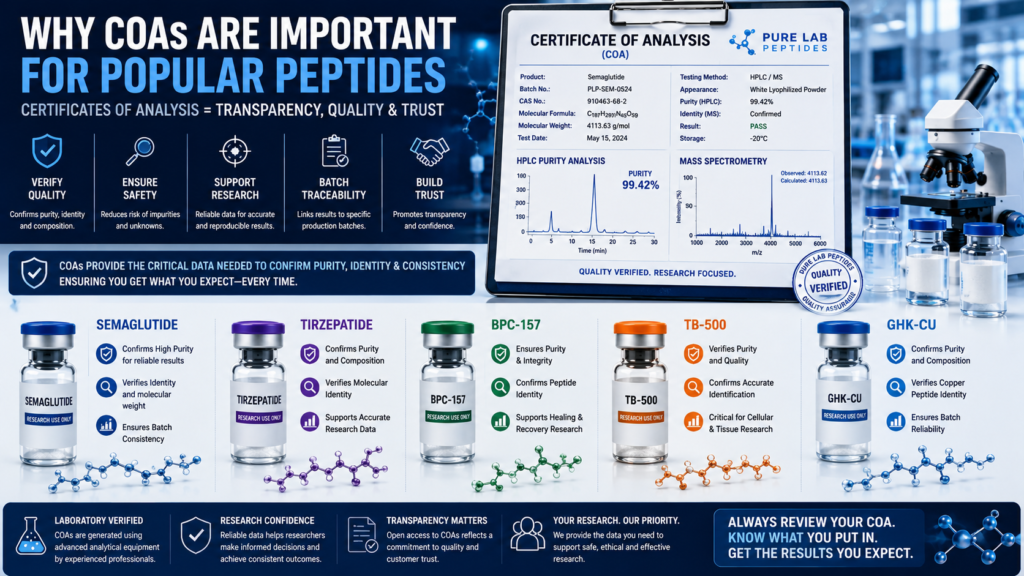
As certain peptides become increasingly popular within scientific research, the importance of Certificates of Analysis becomes even more significant. Researchers often seek additional quality verification when evaluating well-known compounds because product consistency, purity, and transparency play major roles in supporting reliable investigations. Peptides COA
Popular peptides frequently attract greater attention from researchers due to their association with metabolic-health research, appetite-regulation pathways, recovery-related studies, and cellular signaling investigations. Because of this increased interest, many researchers expect detailed quality documentation that helps confirm product characteristics.
Certificates of Analysis provide an important layer of transparency by documenting laboratory testing results and supporting confidence in product quality.
Semaglutide COAs
Semaglutide remains one of the most widely discussed peptides within modern metabolic-health and appetite-regulation research. Because of its popularity, researchers often place strong emphasis on reviewing Certificates of Analysis associated with semaglutide products.
A semaglutide COA typically provides information regarding product identity, purity testing, analytical methods, and batch-specific laboratory results. Researchers may review this information to better understand product characteristics and evaluate analytical data before selecting materials for research purposes. Peptides COA
As demand for semaglutide-related information continues growing, transparency through documented laboratory testing remains an important consideration. Peptides COA
Tirzepatide COAs
Tirzepatide has become one of the most prominent compounds within peptide science due to its dual-action interaction with GLP-1 and GIP pathways. Its increasing popularity has led many researchers to place additional focus on quality documentation and laboratory verification. Peptides COA
Certificates of Analysis associated with tirzepatide products often include purity assessments, identity verification results, testing methodologies, and batch-specific information. These documents help support confidence by providing researchers with objective laboratory data rather than relying solely on product descriptions. Peptides COA
Because tirzepatide remains a major focus of scientific investigation, COAs continue playing an important role in promoting transparency and quality assurance. Peptides COA
Liraglutide COAs
Liraglutide is another established peptide frequently discussed within metabolic-health research. Although newer compounds often receive greater attention, researchers still value quality documentation associated with liraglutide products. Peptides COA
A liraglutide COA generally provides analytical information similar to other peptide certificates, including purity testing results, laboratory verification details, and product identification data. Peptides COA
By reviewing Certificates of Analysis, researchers can better understand the analytical characteristics of specific peptide batches and make more informed evaluations. Peptides COA
Recovery Peptide COAs
Beyond metabolic-health peptides, Certificates of Analysis are equally important for recovery-related compounds such as BPC-157, TB-500, and GHK-Cu. Researchers exploring these peptides often rely on laboratory documentation to support quality verification and product transparency. Peptides COA
BPC-157 COAs may include purity assessments and identity confirmation results that help researchers evaluate batch characteristics. TB-500 certificates often provide similar information regarding testing procedures and analytical outcomes. GHK-Cu COAs may additionally include laboratory data relevant to peptide composition and product verification.
As recovery-focused research continues expanding, quality documentation remains a valuable resource for researchers seeking transparent information about peptide products.
Across all peptide categories, Certificates of Analysis help provide a standardized method for communicating laboratory results. Whether researchers are evaluating semaglutide, tirzepatide, liraglutide, BPC-157, TB-500, GHK-Cu, or other compounds, COAs continue serving as one of the most important tools for supporting transparency, quality assurance, and informed decision-making within the peptide industry.
How to Read a Peptides COA
Understanding how to read a peptide Certificate of Analysis is an important skill for researchers seeking transparency and quality assurance. Although laboratory reports may appear technical at first glance, most COAs follow a structured format that allows researchers to quickly identify key information related to product quality, purity, identity, and testing methods. Peptides COA
By learning how to interpret the different sections of a COA, researchers can make more informed decisions when evaluating peptide products and comparing suppliers. A properly documented Certificate of Analysis provides valuable insight into how a peptide was tested and whether the analytical results align with expected specifications. Peptides COA
Understanding Purity Percentages
One of the first areas researchers typically review is the purity percentage. This figure indicates the proportion of the sample that consists of the intended peptide compound compared to detectable impurities or related substances.
Purity percentages are commonly determined through High-Performance Liquid Chromatography (HPLC) analysis and are often displayed prominently on the certificate. Researchers frequently use purity data as an important indicator when evaluating peptide quality and consistency.
While purity percentages are only one aspect of a complete quality assessment, they remain among the most closely examined values within a Certificate of Analysis.
Interpreting Laboratory Results
Laboratory results may include multiple data points depending on the analytical procedures performed. Researchers should review the reported results alongside the testing methods used to generate them.
Some COAs include chromatograms, analytical summaries, or tables containing numerical results. These sections help explain how laboratory conclusions were reached and provide additional context for purity assessments and identity verification.
Understanding how laboratory data is presented allows researchers to evaluate Certificates of Analysis more confidently and identify important information relevant to their research objectives.
Identifying Testing Methods
A reliable COA will typically specify the analytical methods used during testing. Common examples include HPLC for purity assessment and mass spectrometry for molecular identity confirmation.
Researchers should review these methods because different analytical techniques provide different types of information. Knowing which tests were performed helps explain the meaning of the reported results and supports a more accurate interpretation of the certificate.
Clear documentation of testing methodologies is often considered an important indicator of transparency and professionalism within the peptide industry.
Reviewing Batch Information
Batch information is another critical component of a peptide COA. Product batches are assigned unique identifiers that allow researchers to match laboratory results with specific production runs.
When reviewing a Certificate of Analysis, researchers should confirm that the batch number on the certificate corresponds to the batch number associated with the product being evaluated. This helps ensure that the analytical results apply directly to the specific peptide lot under consideration.
Batch verification also supports traceability and quality-control documentation. Peptides COA
Verifying Authenticity
Authenticity is an important consideration when evaluating any Certificate of Analysis. Researchers should look for details such as laboratory information, testing dates, certificate reference numbers, and other identifying data that help verify the legitimacy of the document. Peptides COA
Certificates that contain complete documentation generally provide greater transparency than those lacking important details. Researchers often prefer suppliers that openly provide quality documentation and clearly identify the analytical procedures used to generate reported results. Peptides COA
As the peptide industry continues expanding, the ability to properly read and interpret Certificates of Analysis remains one of the most valuable skills researchers can develop. Understanding purity data, testing methods, batch information, and authenticity indicators helps support more informed evaluations and promotes greater confidence in peptide quality documentation. Peptides COA
Red Flags to Watch For
While Certificates of Analysis can be valuable tools for evaluating peptide quality, not all COAs provide the same level of transparency. Researchers should carefully review documentation and be aware of potential warning signs that may indicate incomplete testing, insufficient quality-control procedures, or a lack of transparency from a supplier. Peptides COA
Understanding common red flags can help researchers make more informed decisions when reviewing peptide documentation and selecting suppliers for research purposes.
Missing COAs
One of the most obvious warning signs is the complete absence of a Certificate of Analysis. Reputable suppliers often recognize the importance of quality documentation and provide access to COAs upon request or directly alongside product information. Peptides COA
When a supplier cannot provide any form of analytical documentation, researchers may have limited ability to verify product identity, purity, or testing procedures. The absence of a COA does not automatically indicate a problem, but it does reduce transparency and may raise questions regarding quality-control practices.
Researchers frequently prioritize suppliers that openly provide supporting documentation and laboratory information. Peptides COA
Incomplete Laboratory Information
A Certificate of Analysis should generally contain information regarding the laboratory responsible for conducting the testing. Missing laboratory details can make it difficult to verify where testing was performed or how analytical results were generated.
Researchers often prefer documentation that clearly identifies testing facilities, analytical methods, and verification procedures. Complete laboratory information helps support confidence in the testing process and promotes greater transparency.
When laboratory details are absent or unclear, researchers may have fewer opportunities to evaluate the credibility of the reported results.
Lack of Batch Numbers
Batch numbers are essential for linking a Certificate of Analysis to a specific production lot. Without batch identification, researchers may have difficulty confirming that a COA corresponds to the peptide product being evaluated. Peptides COA
Batch numbers support traceability, quality assurance, and consistency monitoring. They also allow suppliers to maintain detailed records and provide more accurate documentation for individual product lots. Peptides COA
Researchers often view missing batch information as a significant limitation because it reduces the ability to verify the relevance of laboratory results. Peptides COA
Unclear Testing Methods
Analytical results are most valuable when researchers understand how they were obtained. Certificates of Analysis should clearly identify the testing methods used during analysis, such as High-Performance Liquid Chromatography (HPLC) or mass spectrometry. Peptides COA
When testing methodologies are omitted or described vaguely, researchers may find it more difficult to interpret the reported results. Clear documentation of analytical procedures helps support transparency and allows researchers to better understand the meaning of laboratory findings. Peptides COA
Transparent testing information is often considered a hallmark of quality-focused suppliers.
Poor Transparency
Perhaps the most important red flag is a general lack of transparency. This can include incomplete documentation, missing analytical details, unclear product information, or difficulty obtaining quality-related data from a supplier.
Transparency helps build trust by allowing researchers to review objective information regarding peptide quality and testing procedures. Suppliers that openly provide Certificates of Analysis, explain testing methods, and offer educational resources are often viewed more favorably within the research community.
As the peptide industry continues growing, transparency remains one of the strongest indicators of professionalism and commitment to quality assurance. Researchers who understand these red flags are better equipped to evaluate peptide documentation and make informed decisions when selecting research products.
Why Transparency Matters in the Peptide Industry
Transparency has become one of the most important factors influencing trust within the peptide industry. As peptide research continues expanding across the UK and internationally, researchers increasingly seek suppliers that openly provide quality documentation, educational resources, and detailed information regarding their products. Peptides COA
Certificates of Analysis play a major role in transparency because they allow researchers to review laboratory-generated data rather than relying solely on marketing materials or product descriptions. This access to analytical information helps create a more informed research environment and supports confidence in peptide quality. Peptides COA
As awareness surrounding peptide science grows, transparency is expected to remain a defining characteristic of reputable peptide suppliers. Peptides COA
Quality Assurance
Quality assurance is one of the primary benefits of transparency. When suppliers provide detailed Certificates of Analysis and openly discuss testing procedures, researchers gain greater insight into how product quality is evaluated. Peptides COA
Transparent quality-control practices help demonstrate a commitment to consistency, analytical verification, and professional standards. Researchers often view these practices as positive indicators when comparing peptide suppliers and evaluating product documentation. Peptides COA
Quality assurance supported by accessible laboratory information can contribute significantly to overall research confidence. Peptides COA
Research Reliability
Reliable research depends on access to accurate and consistent information. Transparency helps support research reliability by ensuring that researchers have access to relevant data regarding product identity, purity, and testing methodologies.
When laboratory results are clearly documented and easy to review, researchers can better understand the characteristics of the peptide products they are evaluating. This improved understanding supports more informed decision-making and encourages evidence-based research practices.
As peptide science continues advancing, reliable documentation will remain an essential component of scientific transparency.
Product Consistency
Consistency is another important benefit associated with transparent quality documentation. Certificates of Analysis provide batch-specific information that allows researchers to compare products across different production runs. Peptides COA
By reviewing analytical results, researchers can evaluate whether product characteristics remain consistent over time. This consistency is particularly important in research environments where reproducibility and standardization are highly valued. Peptides COA
Transparent documentation helps strengthen confidence that peptide products are being evaluated through structured quality-control procedures. Peptides COA
Building Customer Trust
Trust is built when suppliers provide clear, accessible, and verifiable information. Researchers are increasingly drawn to suppliers that prioritize transparency because it demonstrates professionalism and accountability.
Providing Certificates of Analysis, explaining testing methods, offering educational resources, and maintaining open communication all contribute to stronger relationships between suppliers and the research community.
As competition within the peptide industry continues increasing, transparency has become one of the most effective ways for suppliers to distinguish themselves and establish long-term credibility.
Why Researchers Request COAs from Pure Lab Peptides
Researchers exploring peptide products often seek suppliers that prioritize transparency and educational value. Pure Lab Peptides recognizes the importance of providing clear information that helps researchers better understand peptide quality and laboratory documentation. Peptides COA
Commitment to Transparency
Transparency remains a core principle when discussing peptide quality. Researchers frequently request Certificates of Analysis because they provide additional insight into product testing and analytical verification.
By supporting access to quality-related information, suppliers can help promote greater confidence and encourage evidence-based decision-making within the research community. Peptides COA
Educational Resources
Beyond product information, many researchers value educational content that explains peptide science, testing methodologies, and quality-control concepts. Educational resources help readers better understand the significance of Certificates of Analysis and how laboratory testing supports transparency. Peptides COA
As peptide research becomes increasingly mainstream, educational materials continue playing an important role in promoting scientific understanding. Peptides COA
Product Documentation
Product documentation provides researchers with additional information regarding peptide characteristics, testing procedures, and quality-related considerations. Combined with Certificates of Analysis, these resources help create a more complete picture of peptide products and their supporting documentation.
Researchers often appreciate suppliers that make documentation accessible and easy to understand.
Quality-Focused Information
Quality-focused information helps researchers evaluate peptide products with greater confidence. By providing educational content about Certificates of Analysis, testing methodologies, purity assessment, and laboratory verification, suppliers can support more informed discussions surrounding peptide quality.
As demand for transparency continues growing, access to reliable information is becoming increasingly valuable throughout the peptide industry. Peptides COA
For researchers interested in learning more about peptide quality, Certificates of Analysis, and peptide-related educational resources, Pure Lab Peptides provides information designed to support transparency, scientific learning, and informed decision-making within the growing field of peptide research.
What is a peptide COA?
A peptide COA, or Certificate of Analysis, is a laboratory document that provides detailed information about a specific peptide batch. It typically includes purity results, testing methods, batch numbers, product identification details, and laboratory verification information. Researchers use COAs to gain greater transparency regarding peptide quality and analytical testing procedures. Peptides COA
Why is a COA important?
A Certificate of Analysis helps support transparency and quality assurance by providing documented laboratory results. Researchers often review COAs to better understand peptide identity, purity, and testing methodologies before selecting products for research purposes.
What purity percentage is considered high?
Many researchers look for peptides with high reported purity levels because purity is commonly used as an indicator of product consistency and analytical quality. The exact purity expectations may vary depending on the peptide and research objectives, but purity results are often one of the most closely reviewed sections of a Certificate of Analysis. Peptides COA
What is HPLC testing?
High-Performance Liquid Chromatography (HPLC) is one of the most widely used analytical techniques in peptide testing. It is commonly used to assess peptide purity by separating compounds within a sample and measuring their relative concentrations. HPLC results are frequently included on peptide COAs.
What is mass spectrometry?
Mass spectrometry is a laboratory technique used to verify molecular identity. It measures the molecular weight of a peptide and helps confirm that the tested compound corresponds to the intended peptide structure. Many Certificates of Analysis include mass spectrometry results alongside HPLC testing data.
How do I verify a peptide COA?
Researchers can verify a COA by reviewing batch numbers, laboratory information, testing dates, analytical methods, and certificate reference details. Matching the batch number on the certificate with the product batch being evaluated is an important part of the verification process.
Do all peptide suppliers provide COAs?
Not all suppliers provide Certificates of Analysis. However, many researchers prefer suppliers that offer accessible quality documentation because it promotes transparency and provides additional insight into product testing and analytical verification.
Why are batch numbers important?
Batch numbers allow researchers to connect a Certificate of Analysis to a specific production lot. This helps support traceability, quality assurance, and consistency when comparing different peptide batches.
Can COAs confirm peptide identity?
Yes. Analytical methods such as mass spectrometry are commonly used to help verify peptide identity. These testing procedures provide information regarding molecular characteristics and help confirm that a product corresponds to the intended peptide compound. Peptides COA
Where can I request peptide COAs?
Researchers interested in peptide Certificates of Analysis should contact their peptide supplier directly. Suppliers that prioritize transparency often provide COAs or make quality documentation available upon request. For peptide quality information, research-focused resources, and educational content, readers can explore Pure Lab Peptides. Peptides COA
Final Thoughts on Peptides COA
Certificates of Analysis have become one of the most important tools for promoting transparency within the peptide industry. As peptide research continues growing, researchers increasingly rely on COAs to evaluate purity, verify identity, understand testing procedures, and review quality-related information.
A well-documented COA provides valuable insight into product characteristics and helps researchers make more informed decisions when selecting peptide products. By understanding how to read Certificates of Analysis and recognize important testing methods such as HPLC and mass spectrometry, researchers can better assess peptide quality and laboratory verification standards. Peptides COA
Transparency remains a cornerstone of responsible peptide research. Suppliers that provide clear documentation, accessible testing information, and educational resources often inspire greater confidence within the research community. Peptides COA
As the peptide industry continues evolving, Certificates of Analysis will remain essential for supporting quality assurance, product consistency, and informed scientific investigation. Researchers who understand COAs are better equipped to evaluate peptide products and navigate the increasingly sophisticated world of peptide science. Peptides COA
Explore the latest peptide research, quality documentation information, and peptide educational resources at Pure Lab Peptides.