
Research Peptides – Complete Guide to Peptide Science, Popular Compounds & Modern Research
What Are Research Peptides?
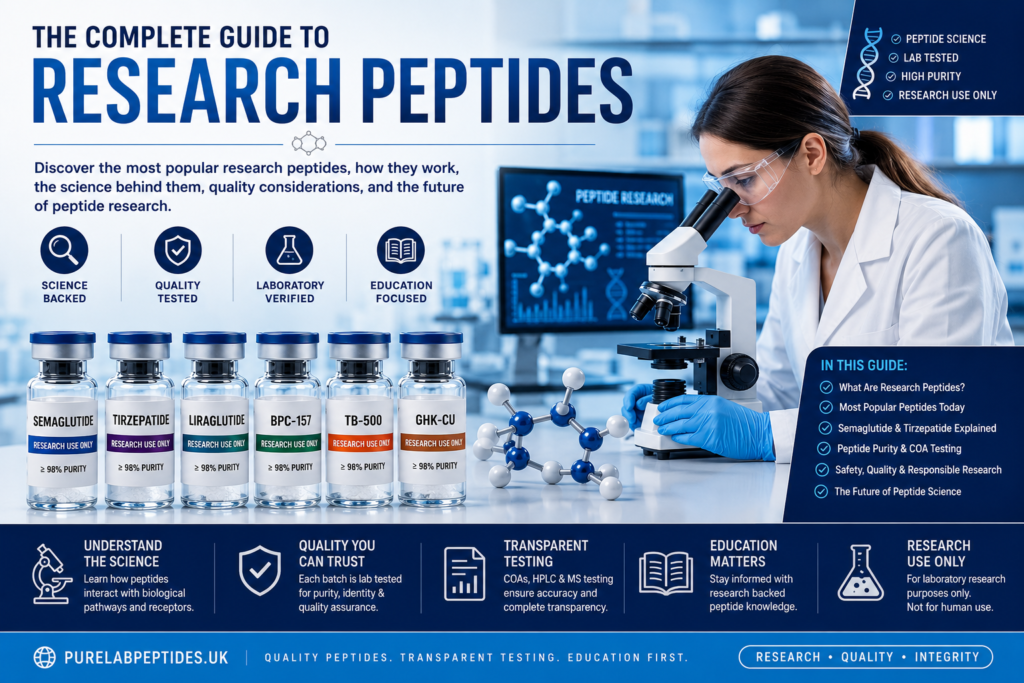
Research peptides have become one of the most discussed topics in modern biotechnology, metabolic science, and cellular research. As scientific understanding continues to evolve, researchers are increasingly exploring peptides for their unique ability to interact with specific biological pathways and cellular communication systems.
Unlike traditional supplements, research peptides are studied because of their targeted interactions with receptors, hormones, and signaling molecules throughout the body. These compounds have attracted significant interest due to their involvement in areas such as metabolism, appetite regulation, recovery pathways, tissue-support research, and cellular function. Research Peptides
The growing popularity of compounds such as semaglutide, tirzepatide, liraglutide, BPC-157, TB-500, and GHK-Cu has brought peptide science into the spotlight. As a result, researchers, healthcare professionals, and scientific enthusiasts are seeking reliable information about what research peptides are and why they continue to receive attention across multiple fields of study. Research Peptides
Understanding Peptide Science
Peptides are short chains of amino acids linked together by peptide bonds. Amino acids are often referred to as the building blocks of proteins, and peptides can be thought of as smaller, more specialized structures that perform specific biological functions within the body. Research Peptides
Naturally occurring peptides play an essential role in many physiological processes. They act as signaling molecules that help cells communicate with one another and regulate important biological activities. Examples of naturally occurring peptides include hormones, growth factors, neurotransmitters, and immune-system signaling molecules. Research Peptides
Scientific advancements have also enabled researchers to develop synthetic peptides that mimic or influence naturally occurring biological pathways. These laboratory-created compounds allow researchers to investigate specific mechanisms and gain a deeper understanding of how certain physiological systems function.
Because peptides can be designed to target particular receptors or pathways, they offer unique opportunities for scientific investigation compared to broader compounds that affect multiple systems simultaneously.
Why Researchers Study Peptides
Researchers are interested in peptides because of their ability to provide insight into highly specific biological mechanisms. Many peptides interact directly with receptors located on the surface of cells, triggering signaling events that influence various physiological functions.
This targeted approach makes peptides valuable tools for studying areas such as metabolism, appetite regulation, hormonal communication, tissue-support pathways, cellular repair mechanisms, and energy utilization. By examining how peptides interact with these systems, researchers can gain valuable information about normal biological processes and potential future applications.
In recent years, peptides involved in metabolic-health research have generated particular interest. Compounds such as semaglutide and tirzepatide have become prominent subjects of scientific investigation because they interact with pathways associated with appetite signaling and glucose regulation.
At the same time, other research peptides such as BPC-157, TB-500, and GHK-Cu continue attracting attention for their association with recovery-related and cellular-function research.
How Research Peptides Differ from Traditional Supplements
One of the biggest differences between research peptides and traditional supplements is their mechanism of action. Many dietary supplements provide nutrients, vitamins, minerals, or botanical ingredients intended to support general wellness. Research peptides, however, are typically studied because they interact with specific biological targets.
Rather than acting broadly throughout the body, peptides often influence particular receptors or signaling pathways. This targeted nature allows researchers to investigate highly specific physiological processes and cellular responses.
Research peptides are also commonly evaluated through laboratory studies and scientific investigations focused on understanding biological mechanisms. Their value lies in the information they can provide about cellular communication, metabolic regulation, and physiological function.
As peptide science continues advancing, research peptides remain at the forefront of scientific exploration, helping researchers uncover new insights into the complex systems that regulate human biology. Understanding these compounds provides an important foundation for exploring the many peptide categories and research areas discussed throughout this guide.
How Research Peptides Work
One of the reasons research peptides have attracted so much scientific attention is their ability to interact with highly specific biological pathways. Unlike many compounds that affect multiple systems simultaneously, peptides often target particular receptors, signaling molecules, or cellular processes. This targeted activity allows researchers to study physiological mechanisms with greater precision and understand how different biological systems communicate and function.
Research peptides are commonly investigated in areas such as metabolism, appetite regulation, hormone signaling, cellular communication, recovery pathways, and energy utilization. By examining these interactions, scientists can gain valuable insight into the complex processes that regulate the human body.
As peptide science continues advancing, understanding how research peptides work provides an important foundation for evaluating their growing role in modern research.
Biological Signaling Pathways
The human body relies on an intricate network of signaling pathways that allow cells, tissues, and organs to communicate with one another. Peptides play a crucial role within this communication system by acting as signaling molecules that transmit information between cells.
When a peptide binds to a specific receptor, it can trigger a series of biological responses known as signal transduction pathways. These pathways help regulate numerous physiological processes, including metabolism, appetite, hormone release, immune responses, and cellular activity.
Because peptides often interact with highly specific receptors, researchers can use them to investigate targeted biological mechanisms and gain a deeper understanding of how certain physiological systems operate.
Appetite and Satiety Research
One of the most widely studied areas of peptide research involves appetite regulation and satiety signaling. Certain peptides interact with pathways that help regulate hunger, fullness, and food intake.
GLP-1-related peptides, including semaglutide and liraglutide, have become particularly important within this area of research. Scientists study these compounds because they mimic naturally occurring signaling molecules involved in appetite regulation and digestive-system communication.
Research has shown that these pathways influence how the brain receives hunger-related signals, how quickly food moves through the digestive system, and how feelings of fullness are experienced following meals. Understanding these mechanisms remains a major focus of ongoing scientific investigation.
Metabolic Research Applications
Research peptides are also extensively studied for their involvement in metabolic pathways. Metabolism encompasses the biological processes responsible for converting nutrients into energy and regulating how the body utilizes fuel sources.
Certain peptides influence pathways associated with glucose regulation, insulin signaling, and cellular energy utilization. Researchers investigate these interactions to better understand metabolic function and the complex communication networks that help maintain physiological balance.
Tirzepatide has generated considerable interest because it interacts with both GLP-1 and GIP pathways, while semaglutide primarily focuses on GLP-1 receptor activity. These unique mechanisms have made both compounds central subjects of metabolic-health research.
As scientific understanding continues evolving, metabolic peptide research remains one of the fastest-growing areas within modern biotechnology.
Receptor-Specific Activity
A defining characteristic of many research peptides is their receptor-specific activity. Rather than producing broad, generalized effects, peptides often bind to highly targeted receptors located on specific cells or tissues.
This precision enables researchers to investigate individual biological pathways in greater detail. By understanding how specific receptors respond to peptide signaling, scientists can gain valuable insights into cellular communication, physiological regulation, and biological adaptation.
The receptor-targeting nature of peptides is one of the primary reasons they continue attracting attention across multiple scientific disciplines.
As research progresses, the ability of peptides to interact with specialized signaling pathways will likely remain a major driver of innovation and discovery within the fields of metabolic science, biotechnology, and cellular research.
Most Popular Research Peptides Today
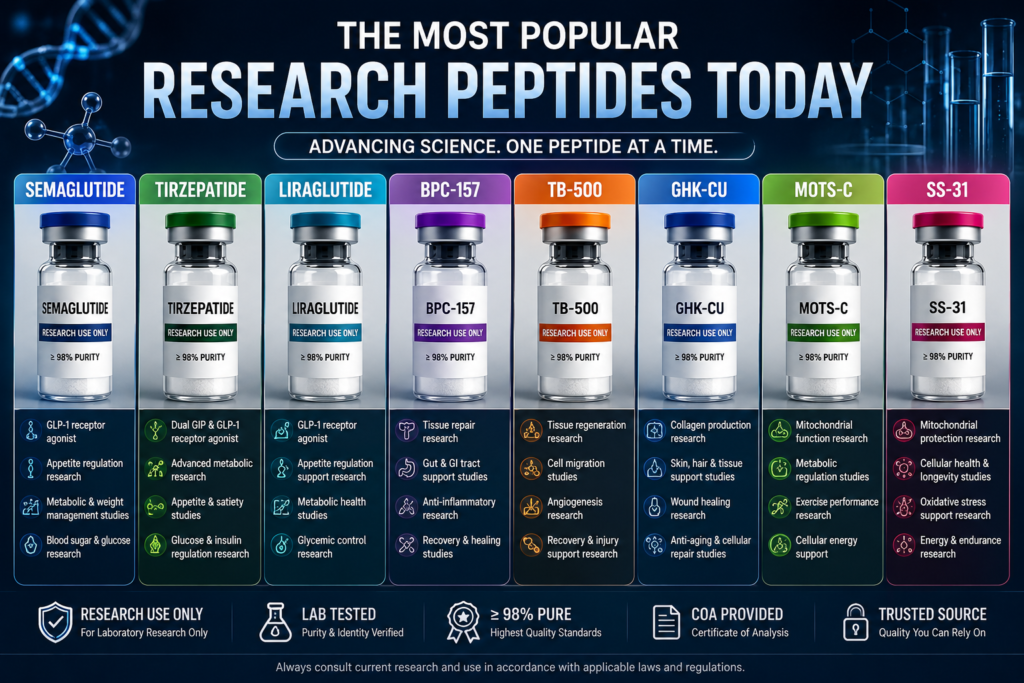
The peptide industry has expanded significantly over the past decade, leading to growing interest in a variety of compounds that are being investigated for their interactions with metabolic, hormonal, cellular, and recovery-related pathways. While hundreds of peptides exist within scientific literature, a small number have emerged as some of the most widely discussed and researched compounds in modern peptide science.
These peptides attract attention because of their targeted biological activity and the unique pathways they influence. Researchers continue exploring their mechanisms of action, receptor interactions, and potential applications within various fields of study.
Among the most recognized research peptides today are semaglutide, tirzepatide, liraglutide, BPC-157, TB-500, and GHK-Cu.
Semaglutide
Semaglutide has become one of the most prominent peptides in metabolic-health research. It belongs to a category of compounds known as GLP-1 receptor agonists and is studied for its interaction with appetite-regulation and glucose-related pathways.
Researchers are particularly interested in semaglutide because it mimics a naturally occurring hormone involved in satiety signaling and digestive-system communication. Its influence on these pathways has made it one of the most discussed peptides within modern scientific literature.
As awareness of GLP-1 research continues growing, semaglutide remains at the forefront of peptide-related investigations.
Tirzepatide
Tirzepatide has generated exceptional scientific interest due to its unique dual-pathway mechanism. Unlike semaglutide, which primarily targets GLP-1 receptors, tirzepatide interacts with both GLP-1 and GIP receptors.
This dual-action approach has positioned tirzepatide as one of the most innovative peptides currently being studied. Researchers continue investigating how these combined receptor interactions influence metabolic signaling, energy regulation, and appetite-related pathways.
Because of its distinctive biological activity, tirzepatide has quickly become one of the most talked-about compounds within peptide science.
Liraglutide
Liraglutide is another well-established GLP-1-related peptide that has played an important role in metabolic-health research. Although newer compounds often receive more attention, liraglutide remains a significant subject of scientific investigation.
Researchers continue studying liraglutide because of its interaction with appetite-regulation pathways and its contribution to understanding GLP-1 receptor biology. Its extensive research history has helped provide valuable insights into peptide signaling and metabolic regulation.
BPC-157
BPC-157 is one of the most widely recognized peptides within recovery-focused scientific discussions. Researchers are interested in this compound because of its association with tissue-support pathways, cellular communication systems, and biological repair mechanisms.
Although research remains ongoing, BPC-157 continues attracting attention from scientists investigating recovery-related biological processes and cellular adaptation pathways.
Its popularity has made it one of the most frequently discussed peptides outside of the metabolic-health category.
TB-500
TB-500 is another peptide commonly associated with recovery-related research. Scientists study TB-500 because of its relationship with cellular movement, tissue-support pathways, and biological signaling processes.
Research involving TB-500 often focuses on understanding how cells communicate and respond to various physiological conditions. This ongoing interest has established TB-500 as one of the most recognized recovery-focused peptides within scientific literature.
GHK-Cu
GHK-Cu, also known as a copper peptide, has become increasingly popular due to its involvement in cellular signaling and biological maintenance pathways. Researchers continue exploring its role in various physiological processes and its interactions with cellular communication networks.
Its unique structure and long-standing presence within peptide research have made GHK-Cu one of the most respected compounds in the peptide community.
As peptide science continues evolving, semaglutide, tirzepatide, liraglutide, BPC-157, TB-500, and GHK-Cu remain among the most influential compounds driving scientific interest. Their growing popularity reflects the increasing importance of peptide research and the expanding opportunities for understanding complex biological systems.
Why Semaglutide and Tirzepatide Receive So Much Attention
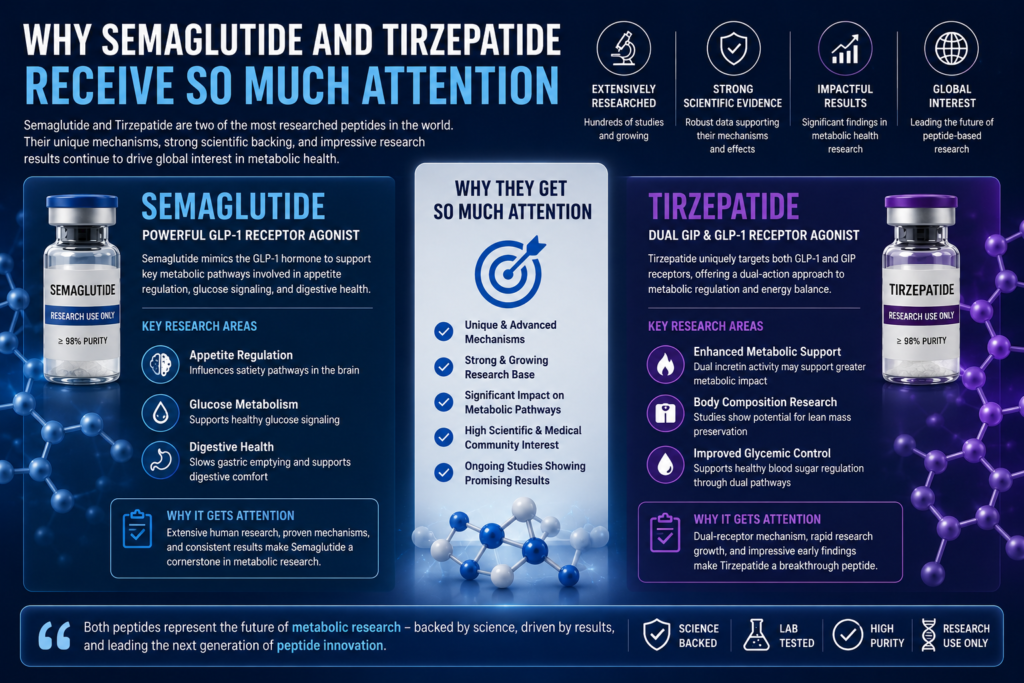
Among all research peptides currently being discussed, semaglutide and tirzepatide consistently receive the highest level of scientific interest. Researchers, healthcare professionals, and biotechnology companies continue studying these compounds because of their unique interactions with biological pathways involved in appetite regulation, metabolism, digestion, and energy balance.
Their growing visibility has helped introduce peptide science to a broader audience and has significantly increased interest in metabolic-health research. While many peptides continue attracting scientific attention, semaglutide and tirzepatide have emerged as two of the most influential compounds within modern peptide investigations.
Understanding why these peptides receive so much attention requires examining the biological systems they influence and the scientific questions researchers are attempting to answer.
Understanding GLP-1 Research
GLP-1, or glucagon-like peptide-1, is a naturally occurring hormone involved in appetite signaling and glucose-related biological pathways. Researchers study GLP-1 because it plays an important role in communication between the digestive system, pancreas, and brain.
Semaglutide and tirzepatide are associated with GLP-1-related pathways, making them valuable tools for investigating how the body regulates hunger, satiety, nutrient utilization, and metabolic signaling.
As scientific understanding of GLP-1 biology continues expanding, research involving these compounds remains one of the most active areas within peptide science.
Appetite Regulation Pathways
One of the primary reasons researchers focus on semaglutide and tirzepatide is their interaction with pathways involved in appetite regulation. Appetite is controlled through a complex network of hormonal signals and neurological communication systems that help determine when the body feels hungry or satisfied.
Researchers continue investigating how GLP-1-related signaling influences these pathways and contributes to feelings of fullness. Understanding appetite-regulation mechanisms may provide valuable insights into broader metabolic and physiological processes.
Because appetite signaling remains a major area of scientific interest, peptides associated with these pathways continue receiving significant attention within research communities.
Gastric Emptying Research
Another important area of investigation involves gastric emptying, which refers to the rate at which food moves from the stomach into the digestive tract. Researchers study this process because it influences nutrient absorption, digestive-system signaling, and satiety-related communication.
GLP-1-related peptides are frequently examined within gastric-emptying research due to their interaction with pathways connected to digestive-system function. These investigations help scientists better understand the relationship between digestion, appetite signaling, and metabolic regulation.
The ability of semaglutide and tirzepatide to influence these biological processes has contributed significantly to their growing popularity within peptide science.
Blood Sugar Regulation Studies
Researchers are also interested in how semaglutide and tirzepatide interact with pathways involved in glucose regulation and metabolic signaling. Blood sugar control is influenced by multiple hormones and communication networks that help maintain physiological balance.
Studies involving these peptides often explore how receptor activation affects signaling systems associated with glucose utilization and energy management. Understanding these mechanisms remains an important objective within metabolic-health research.
As scientific knowledge continues evolving, glucose-related investigations are expected to remain a major focus of peptide research.
Emerging Scientific Interest
The scientific interest surrounding semaglutide and tirzepatide extends beyond their individual biological activities. These compounds have also contributed to broader discussions about the future of peptide science and the growing importance of receptor-targeted research.
Researchers continue exploring new peptide technologies, dual-action mechanisms, advanced signaling pathways, and next-generation compounds inspired by current discoveries. Semaglutide and tirzepatide have helped accelerate this momentum by demonstrating the value of highly targeted biological investigations.
As peptide science continues advancing, these compounds are likely to remain central subjects of research while also inspiring the development of future peptide innovations.
Their influence on modern peptide science helps explain why semaglutide and tirzepatide continue receiving exceptional attention from researchers around the world.
Research Peptides with the Strongest Scientific Evidence
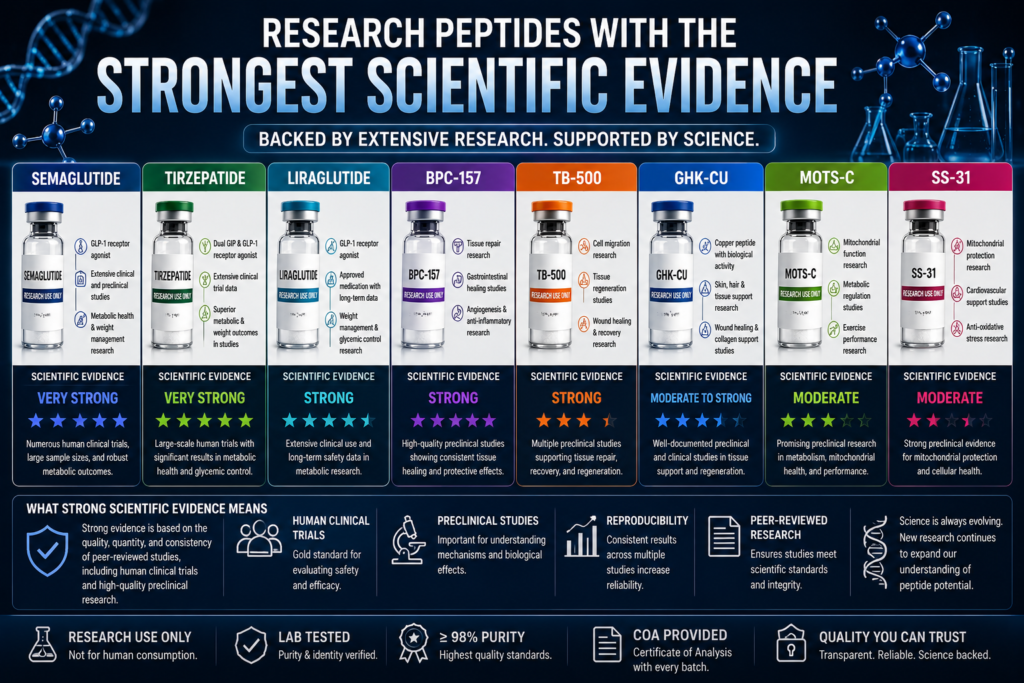
As peptide science continues advancing, some compounds have accumulated significantly more scientific attention than others. Researchers often evaluate the strength of evidence surrounding a peptide by examining the volume of published research, ongoing investigations, biological understanding, and overall scientific interest.
While many peptides remain subjects of emerging research, semaglutide, tirzepatide, and liraglutide currently represent some of the most extensively studied compounds within metabolic-health and appetite-regulation research. These peptides continue generating new scientific data and remain at the center of numerous investigations worldwide.
Understanding which research peptides have the strongest evidence can help readers better appreciate why certain compounds dominate discussions within modern peptide science.
Semaglutide Research Overview
Semaglutide is widely regarded as one of the most extensively researched peptides currently available. Researchers continue studying its interaction with GLP-1 receptor pathways and its influence on appetite regulation, digestive-system communication, and metabolic signaling.
The large body of scientific literature surrounding semaglutide has helped establish it as one of the most recognized compounds within peptide research. Its extensive research history provides scientists with a substantial foundation for understanding how GLP-1-related signaling pathways function.
Because of the amount of available scientific information, semaglutide remains one of the most evidence-supported peptides within modern metabolic-health research.
Tirzepatide Research Overview
Tirzepatide has emerged as one of the most innovative compounds within peptide science due to its dual interaction with both GLP-1 and GIP receptors. This unique mechanism has attracted considerable attention from researchers seeking to better understand complex metabolic signaling pathways.
Although tirzepatide is newer than some other peptides, scientific interest has grown rapidly because of its distinctive receptor activity and expanding body of research. Researchers continue investigating how dual-pathway signaling may influence various biological processes related to metabolism and energy regulation.
Its rapid rise within scientific literature has positioned tirzepatide as one of the most important compounds currently shaping the future of peptide research.
Liraglutide Research Overview
Liraglutide remains an important peptide within the scientific community despite the growing popularity of newer compounds. Researchers have studied liraglutide extensively for many years, helping establish a strong foundation for understanding GLP-1 receptor biology.
Its long history of investigation has contributed significantly to the development of modern peptide science and has provided valuable insights into appetite-regulation pathways and metabolic signaling systems.
Although semaglutide and tirzepatide often receive greater attention today, liraglutide continues serving as an important reference point within GLP-1-related research.
Comparing Current Research Findings
When comparing semaglutide, tirzepatide, and liraglutide, researchers often focus on differences in receptor activity, biological mechanisms, and research objectives. Each compound contributes unique insights into metabolic-health investigations and appetite-related signaling pathways.
Semaglutide is recognized for its extensive research base and strong association with GLP-1 receptor activity. Tirzepatide attracts attention because of its dual GLP-1 and GIP receptor interactions, while liraglutide remains valuable due to its established scientific history and contribution to peptide research.
Together, these compounds represent some of the most important research peptides currently being studied and continue shaping scientific understanding within the field.
Why Evidence Matters
Scientific evidence plays a crucial role in peptide research because it helps researchers distinguish between well-studied compounds and more speculative areas of investigation. Evidence-based research supports transparency, encourages scientific rigor, and provides a stronger foundation for future discoveries.
As the peptide industry continues expanding, researchers increasingly emphasize the importance of reviewing scientific literature, understanding biological mechanisms, and evaluating the strength of available evidence before drawing conclusions about a particular compound.
By focusing on evidence-supported peptides such as semaglutide, tirzepatide, and liraglutide, researchers can better understand the current state of peptide science and identify the areas generating the greatest scientific interest today.
As new discoveries emerge, the body of evidence surrounding research peptides will continue growing, helping drive future innovation and expand our understanding of complex biological systems.
Research Peptides vs Experimental Compounds
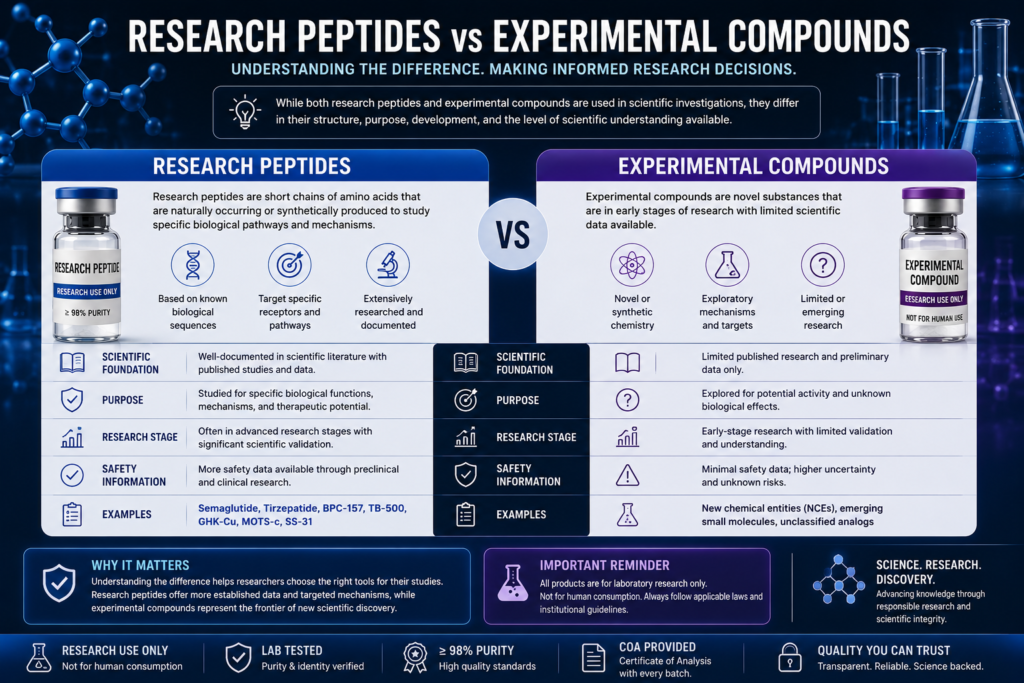
As interest in peptide science continues growing, it is important to understand the distinction between established research peptides and experimental compounds that remain in earlier stages of scientific investigation. While both categories contribute to scientific discovery, they differ significantly in terms of available research, biological understanding, and the amount of evidence supporting their study.
Researchers often evaluate compounds based on the quality and quantity of available scientific data. Some peptides have been studied extensively and have generated substantial research literature, while others remain relatively new and continue undergoing exploratory investigation.
Understanding these differences helps researchers interpret scientific findings more accurately and appreciate the evolving nature of peptide science.
Established Research Peptides
Established research peptides are compounds that have accumulated significant scientific attention and have been the subject of numerous investigations. Examples include semaglutide, tirzepatide, liraglutide, BPC-157, TB-500, and GHK-Cu.
These peptides have attracted interest because researchers have spent years studying their biological mechanisms, receptor interactions, and physiological pathways. As a result, scientists possess a stronger understanding of how these compounds function within specific research contexts.
The availability of published literature, ongoing investigations, and documented biological activity makes established research peptides some of the most widely discussed compounds within modern peptide science.
Emerging Peptide Investigations
Alongside established compounds, researchers continue exploring new peptides that may offer insights into previously understudied biological pathways. These emerging compounds often represent the next generation of peptide science and may introduce novel mechanisms of action or unique receptor interactions.
Researchers investigate emerging peptides to better understand cellular communication, metabolic regulation, mitochondrial activity, biological resilience, and other complex physiological processes. Examples of peptides receiving growing attention include MOTS-c, SS-31, and other compounds associated with advanced metabolic and cellular research.
Although these peptides may not yet possess the same level of scientific evidence as more established compounds, they represent important areas of ongoing discovery.
Understanding Scientific Evidence
Scientific evidence develops over time through repeated investigation, peer-reviewed research, and continued exploration of biological mechanisms. Compounds with extensive research histories typically provide researchers with greater confidence because their biological activity has been examined across multiple studies and scientific settings.
Newer compounds often generate excitement because they may reveal previously unknown aspects of physiology or cellular function. However, researchers generally recognize that emerging peptides require additional investigation before their biological significance can be fully understood.
This distinction highlights the importance of evaluating research findings within the context of available evidence rather than relying solely on popularity or speculation.
Importance of Ongoing Research
Scientific progress depends on the continuous investigation of both established and emerging compounds. Established peptides help deepen our understanding of known biological pathways, while experimental compounds create opportunities to explore new areas of scientific discovery.
Many of today’s most widely discussed peptides were once considered experimental. Through years of research, they gradually accumulated evidence and became important subjects of scientific study. This process continues today as researchers investigate new peptides and seek to expand our understanding of human biology.
As peptide science evolves, maintaining a balance between evidence-based knowledge and scientific curiosity remains essential. Researchers benefit from understanding both established research peptides and emerging experimental compounds because together they drive innovation, discovery, and future advancements within the field.
The ongoing exploration of peptide biology ensures that research peptides will continue playing an important role in expanding scientific knowledge and uncovering new insights into the complex systems that regulate human physiology.
Quality Considerations When Choosing Research Peptides
As the popularity of research peptides continues growing, researchers are becoming increasingly focused on quality, transparency, and product consistency. The peptide industry now offers a wide range of compounds, suppliers, and product formats, making it important to understand the factors that contribute to quality-focused peptide research.
Choosing research peptides is not simply about selecting a particular compound. Researchers often evaluate purity, laboratory testing, Certificates of Analysis (COAs), manufacturing standards, and supplier transparency before making decisions regarding peptide products.
Understanding these quality considerations helps support informed decision-making and promotes greater confidence when exploring peptide-related research.
Peptide Purity
Purity is one of the most important factors researchers examine when evaluating peptide products. In peptide science, purity refers to the percentage of a sample that consists of the intended peptide compound compared to impurities or related substances.
Higher purity levels are often associated with greater consistency and improved transparency regarding product composition. Researchers frequently review purity information because it provides valuable insight into product quality and laboratory testing results.
Purity assessments are commonly included within Certificates of Analysis and are often generated using analytical methods such as High-Performance Liquid Chromatography (HPLC).
As peptide research continues expanding, purity remains one of the most widely recognized indicators of product quality.
Certificates of Analysis (COAs)
Certificates of Analysis are among the most important quality documents associated with research peptides. A COA provides laboratory-generated information regarding product identity, purity, testing methods, batch details, and analytical results.
Researchers often request COAs because they offer greater transparency and help verify that a peptide has undergone laboratory evaluation. These certificates provide objective information that can be reviewed independently of product descriptions or marketing materials.
A detailed COA demonstrates a commitment to transparency and quality assurance, making it a valuable resource for researchers seeking reliable peptide information.
Laboratory Testing Standards
Laboratory testing plays a critical role in modern peptide quality control. Analytical techniques such as HPLC and mass spectrometry are frequently used to evaluate purity and verify peptide identity.
These testing methods help researchers better understand the characteristics of a specific peptide batch and provide additional confidence regarding product quality. Laboratories may also perform supplementary assessments depending on the compound and quality-control requirements.
The use of recognized testing procedures contributes significantly to transparency within the peptide industry and supports evidence-based research practices.
Supplier Transparency
Transparency has become one of the most important qualities researchers look for when selecting peptide suppliers. Transparent suppliers often provide detailed product information, accessible Certificates of Analysis, educational resources, and clear communication regarding testing procedures.
Researchers increasingly prefer suppliers that openly discuss product documentation and quality-control processes because transparency helps build trust and supports informed decision-making.
As competition within the peptide industry grows, transparency continues to serve as an important differentiator between suppliers.
Batch Verification
Batch verification is another essential aspect of peptide quality assurance. Each production batch is typically assigned a unique identifier that allows researchers to match products with their corresponding laboratory documentation.
Batch numbers support traceability and help ensure that Certificates of Analysis relate directly to the product being evaluated. Researchers often review batch information carefully because it contributes to consistency and quality-control verification.
Reliable batch tracking systems are considered an important component of professional quality-assurance programs.
As peptide science continues advancing, quality considerations such as purity, laboratory testing, COAs, supplier transparency, and batch verification will remain central to responsible research practices. Researchers who understand these factors are better positioned to evaluate peptide products, interpret laboratory documentation, and make informed decisions when exploring the expanding world of research peptides.
Understanding Research Peptide Safety
As interest in research peptides continues expanding, safety remains one of the most important topics within peptide science. Researchers place significant emphasis on understanding how peptides interact with biological systems, what pathways they influence, and how scientific investigations can be conducted responsibly.
It is important to recognize that research peptides are primarily studied to better understand biological mechanisms and cellular communication networks. Scientific investigations help researchers gather information regarding receptor interactions, metabolic pathways, hormonal signaling, and physiological responses.
A responsible approach to peptide research requires transparency, evidence-based evaluation, and an understanding of the limitations that exist within ongoing scientific investigations.
Why Research Is Important
Research serves as the foundation of scientific progress. Before biological pathways can be fully understood, researchers must investigate how specific compounds interact with cellular systems and physiological processes.
Peptides provide valuable opportunities for scientific exploration because they often target highly specific receptors and signaling pathways. Through carefully designed investigations, researchers can gain deeper insight into metabolism, appetite regulation, cellular communication, tissue-support mechanisms, and many other biological functions.
The information gathered through peptide research contributes to the broader understanding of human physiology and helps support future scientific advancements.
Common Areas of Investigation
Research peptides are studied across a wide variety of scientific disciplines. Some of the most active areas of investigation include metabolic-health research, appetite-regulation pathways, glucose-related signaling, hormonal communication, recovery-focused biological processes, cellular maintenance systems, and mitochondrial function.
Compounds such as semaglutide, tirzepatide, and liraglutide are frequently examined within metabolic-health investigations, while peptides such as BPC-157, TB-500, and GHK-Cu often attract attention within recovery-related and cellular-function research.
These investigations help researchers better understand how biological systems communicate and adapt under different physiological conditions.
Scientific Limitations
One of the most important aspects of responsible peptide education is acknowledging scientific limitations. While some peptides have accumulated extensive research literature, others remain in earlier stages of investigation.
Scientific understanding evolves continuously as new studies are conducted and additional evidence becomes available. Researchers recognize that ongoing investigation is necessary to fully understand the mechanisms, pathways, and potential significance of many peptide compounds.
For this reason, evidence-based discussions should focus on current scientific knowledge while recognizing that future discoveries may expand or refine existing understanding.
Importance of Responsible Research Practices
Responsible research practices are essential for maintaining scientific integrity and promoting meaningful discoveries. Researchers rely on accurate documentation, transparent reporting, quality-controlled materials, and evidence-based methodologies when conducting peptide-related investigations.
Transparency regarding product quality, Certificates of Analysis, laboratory testing procedures, and scientific evidence helps support responsible decision-making throughout the research process.
As the peptide industry continues growing, responsible research practices remain critical for ensuring that scientific discussions are guided by evidence rather than speculation.
Understanding safety within the context of research peptides ultimately involves recognizing both the opportunities and limitations associated with ongoing scientific investigation. By prioritizing transparency, quality assurance, and evidence-based learning, researchers can continue advancing knowledge while contributing to the responsible development of peptide science.
As interest in research peptides expands worldwide, maintaining a commitment to scientific rigor and responsible investigation will remain essential for supporting future discoveries and a deeper understanding of human biology.
The Future of Research Peptides
The field of peptide science continues evolving at a remarkable pace. Advances in biotechnology, molecular biology, and cellular research have expanded scientific understanding of how peptides interact with biological systems, creating new opportunities for discovery across multiple research disciplines.
As researchers continue exploring complex signaling pathways, metabolic regulation, cellular communication, and physiological adaptation, peptides are expected to play an increasingly important role in future scientific investigations. The growing interest in compounds such as semaglutide, tirzepatide, BPC-157, TB-500, GHK-Cu, MOTS-c, and SS-31 reflects the broader momentum driving peptide research forward.
The future of research peptides is likely to be shaped by innovation, technological advancements, and a deeper understanding of how biological systems communicate and function.
New Peptide Discoveries
Scientific research continues identifying new peptides and peptide-related pathways that may contribute valuable insights into human physiology. Researchers are increasingly investigating compounds that influence metabolism, mitochondrial activity, hormonal signaling, cellular resilience, and biological communication systems.
Each new discovery helps expand scientific knowledge and creates opportunities to explore previously understudied physiological processes. As analytical technologies improve, researchers are gaining greater precision in identifying peptide interactions and understanding how these compounds influence complex biological networks.
The ongoing discovery of new peptides remains one of the most exciting aspects of modern biotechnology.
Advances in Metabolic Research
Metabolic-health research is expected to remain one of the fastest-growing areas within peptide science. The popularity of semaglutide and tirzepatide has demonstrated the significant scientific interest surrounding pathways related to appetite regulation, glucose signaling, energy utilization, and metabolic communication.
Researchers continue exploring how peptides influence these systems and how receptor-targeted approaches can provide deeper insight into physiological regulation. Future investigations may reveal additional peptide pathways that contribute to metabolic function and overall biological balance.
As understanding of metabolism continues improving, peptide research is likely to remain at the center of many important scientific developments.
Personalized Medicine Research
Another area generating significant interest is personalized medicine. Scientists are increasingly studying how biological differences between individuals influence physiological responses and cellular communication systems.
Peptides may play an important role in this growing field because of their ability to interact with highly specific receptors and signaling pathways. Researchers believe that future advances in peptide science may contribute to more targeted approaches for understanding biological variation and physiological regulation.
Although this area remains an active field of investigation, personalized medicine represents one of the most promising frontiers for future scientific exploration.
Emerging Biotechnology Applications
Biotechnology continues driving innovation throughout peptide science. Advances in peptide synthesis, analytical testing, molecular engineering, and computational biology are enabling researchers to study peptides with greater precision than ever before.
New technologies are helping scientists identify novel compounds, analyze complex biological interactions, and better understand the mechanisms underlying peptide activity. These developments are accelerating the pace of discovery and creating opportunities for future breakthroughs.
As biotechnology continues advancing, researchers are expected to uncover additional applications for peptides across a wide range of scientific disciplines.
The future of research peptides appears exceptionally promising. Continued investment in scientific investigation, laboratory technology, and biological research is likely to expand our understanding of peptide signaling and reveal new opportunities for discovery.
As the field progresses, research peptides will remain an important part of modern scientific exploration, helping researchers unlock deeper insights into metabolism, cellular communication, biological adaptation, and the complex systems that regulate human physiology.
Why Researchers Explore Pure Lab Peptides
As the peptide industry continues expanding, researchers are increasingly seeking reliable sources of information that combine product transparency, educational value, and a commitment to scientific learning. Understanding peptide science often requires more than simply reviewing product listings; researchers also benefit from access to detailed educational resources, quality documentation, and information about current developments within the field.
Pure Lab Peptides was created to support this growing demand for peptide-related information by providing research-focused content and access to educational resources covering some of the most discussed compounds in modern peptide science.
Whether researchers are interested in metabolic-health peptides, recovery-related compounds, cellular signaling pathways, or emerging areas of peptide investigation, access to trustworthy information remains essential for supporting informed decision-making.
Research-Focused Information
One of the most important factors researchers consider when exploring peptide resources is the availability of accurate and research-focused information. Peptide science is a rapidly evolving field, and staying informed about current developments requires access to reliable educational content.
Pure Lab Peptides provides information covering a wide range of peptide categories, including GLP-1-related compounds, recovery-focused peptides, wellness-related research compounds, and emerging areas of scientific investigation.
By focusing on educational content and peptide science, researchers can gain a better understanding of biological pathways, receptor interactions, and the mechanisms that continue driving interest in peptide research.
Product Transparency
Transparency has become a defining characteristic of reputable peptide suppliers. Researchers increasingly value suppliers that openly provide information regarding product specifications, laboratory testing, and quality documentation.
Access to transparent information helps researchers evaluate peptide products more effectively and supports evidence-based decision-making. By emphasizing openness and clear communication, suppliers can build stronger relationships with the scientific community and promote greater confidence in their products.
As peptide science continues growing, transparency is expected to remain one of the most important qualities researchers seek when evaluating suppliers and educational resources.
Educational Resources
Educational content plays a critical role in helping researchers understand complex biological concepts and emerging scientific discoveries. Peptide science encompasses a wide variety of topics, including receptor biology, metabolic pathways, cellular signaling, recovery research, and biotechnology innovations.
Pure Lab Peptides supports scientific learning by providing educational resources that explain peptide categories, biological mechanisms, laboratory testing concepts, and current research trends. These resources help readers develop a stronger foundation in peptide science and remain informed about ongoing developments within the industry.
The increasing popularity of peptide research has created greater demand for accessible educational materials, making scientific communication more important than ever.
Commitment to Quality
Quality remains a central consideration throughout the peptide industry. Researchers often evaluate suppliers based on factors such as transparency, documentation, testing information, and educational support.
A commitment to quality extends beyond product information and includes providing resources that help researchers better understand peptide purity, Certificates of Analysis, laboratory testing procedures, and quality-assurance concepts.
By prioritizing transparency and scientific learning, suppliers can help support a more informed research community and encourage responsible discussions surrounding peptide science.
As interest in research peptides continues expanding worldwide, access to reliable information becomes increasingly valuable. Pure Lab Peptides serves as a resource for researchers seeking educational content, peptide-related information, and insight into some of the most discussed compounds currently shaping modern peptide science.
For readers interested in exploring the latest developments in research peptides, peptide purity, laboratory testing, and scientific innovation, Pure Lab Peptides provides a platform dedicated to transparency, education, and the continued advancement of peptide knowledge.
Frequently Asked Questions About Research Peptides
What are research peptides?
Research peptides are short chains of amino acids studied for their interactions with specific biological pathways, receptors, and cellular communication systems. Researchers investigate these compounds to better understand metabolism, hormone signaling, cellular function, recovery pathways, and other physiological processes.
How do research peptides work?
Research peptides typically work by interacting with specific receptors or signaling pathways within the body. These interactions help researchers study biological communication systems and understand how cells regulate various physiological functions.
What are the most popular research peptides?
Some of the most widely discussed research peptides include semaglutide, tirzepatide, liraglutide, BPC-157, TB-500, GHK-Cu, MOTS-c, and SS-31. These compounds continue attracting significant scientific interest across multiple research fields.
Why is semaglutide so popular?
Semaglutide has become one of the most researched peptides because of its association with GLP-1 receptor pathways and metabolic-health investigations. Researchers continue studying its role in appetite regulation and biological signaling.
What makes tirzepatide unique?
Tirzepatide is unique because it interacts with both GLP-1 and GIP receptors. This dual-pathway mechanism has made it one of the most innovative and widely studied peptides in modern research.
What is GLP-1 research?
GLP-1 research focuses on understanding biological pathways involved in appetite regulation, glucose signaling, digestion, and metabolic communication. Several popular research peptides interact with these pathways.
What is a peptide COA?
A peptide COA, or Certificate of Analysis, is a laboratory document that provides information regarding peptide identity, purity, testing methods, batch details, and analytical results. Researchers often review COAs to support quality evaluation and transparency.
How are research peptides tested?
Research peptides are commonly tested using analytical methods such as High-Performance Liquid Chromatography (HPLC) and mass spectrometry. These techniques help verify purity and molecular identity.
What is peptide purity?
Peptide purity refers to the percentage of a sample that consists of the intended peptide compound compared to impurities or related substances. Purity information is commonly included within a Certificate of Analysis.
Where can I learn more about research peptides?
Researchers interested in peptide science, laboratory testing, peptide categories, and current developments can explore Pure Lab Peptides for educational resources and research-focused information.
Final Thoughts on Research Peptides
Research peptides continue transforming the landscape of modern scientific investigation. From metabolic-health studies and GLP-1 research to recovery-focused investigations and advanced cellular signaling research, peptides have become some of the most important tools for understanding complex biological systems.
Compounds such as semaglutide, tirzepatide, liraglutide, BPC-157, TB-500, and GHK-Cu demonstrate the incredible diversity of peptide science and highlight the growing opportunities for scientific discovery. As researchers continue exploring new pathways and emerging compounds, peptide research is expected to remain one of the fastest-growing areas of biotechnology.
The future of peptide science will be shaped by transparency, quality assurance, laboratory innovation, and evidence-based research. Researchers who stay informed about peptide mechanisms, testing standards, and scientific developments will be better positioned to understand the exciting opportunities emerging within this rapidly evolving field.
Explore the latest research peptides, peptide science resources, and educational content at PureLabPeptides.uk and stay informed about the future of modern peptide research.