
Research Peptides UK – Complete Guide to GLP-1 Research, Weight Loss Peptides & Modern Peptide Science
Introduction
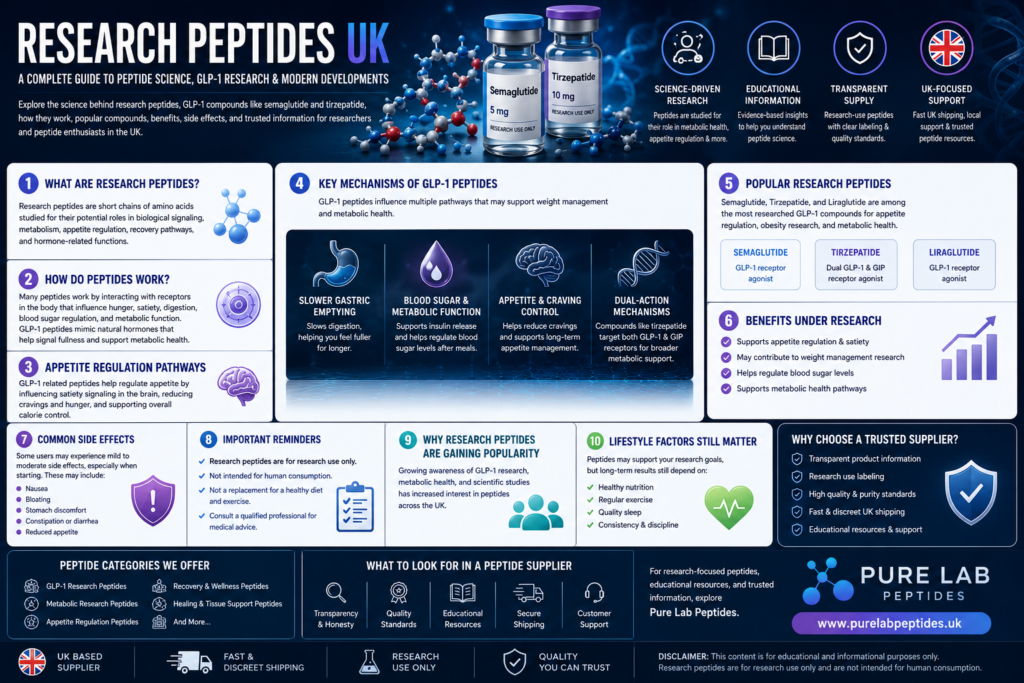
Interest in research peptides UK has increased rapidly as peptide science becomes one of the most discussed areas within metabolic-health, appetite-regulation, and wellness research. Over the past few years, compounds linked to GLP-1 pathways, such as semaglutide and tirzepatide, have gained significant attention because of their strong association with appetite control, satiety signaling, and weight-management discussions. As public awareness grows, more individuals are searching for educational resources and research-focused information connected to modern peptide science. Research Peptides UK
Research peptides are widely studied because peptides naturally function as signaling molecules throughout the body. Different peptide compounds may influence biological pathways connected to metabolism, hunger regulation, blood sugar control, recovery processes, and hormonal communication. Unlike traditional stimulant-based fat burners, many peptide-based compounds are associated with supporting natural physiological signaling mechanisms rather than simply increasing short-term energy expenditure. Research Peptides UK
One reason research peptides UK has become such a rapidly growing search term is the increasing visibility of GLP-1 receptor agonists in obesity and metabolic-health discussions. Semaglutide and tirzepatide have become especially well known due to clinical research involving appetite regulation and long-term weight-management outcomes. These compounds are often discussed because they may help reduce cravings, slow gastric emptying, and support blood sugar regulation through mechanisms connected to natural hormone pathways. Research Peptides UK
At the same time, peptide science extends far beyond weight-management discussions alone. Researchers continue exploring peptides connected to recovery, metabolic function, insulin signaling, wellness-related pathways, and cellular communication. This broad scientific interest has helped transform peptide research into one of the fastest-growing sectors within modern health and biological research discussions. Research Peptides UK
As awareness surrounding peptide science continues expanding, readers are increasingly searching for trustworthy educational resources that explain peptide mechanisms responsibly while distinguishing research-use compounds from approved pharmaceutical therapies. Transparency and evidence-based information have become especially important as the peptide industry grows across the UK. Research Peptides UK
For readers interested in exploring peptide science further, Pure Lab Peptides provides research-focused peptide information, educational resources, and peptide product listings connected to modern developments within the UK peptide market.
Understanding Peptide Science
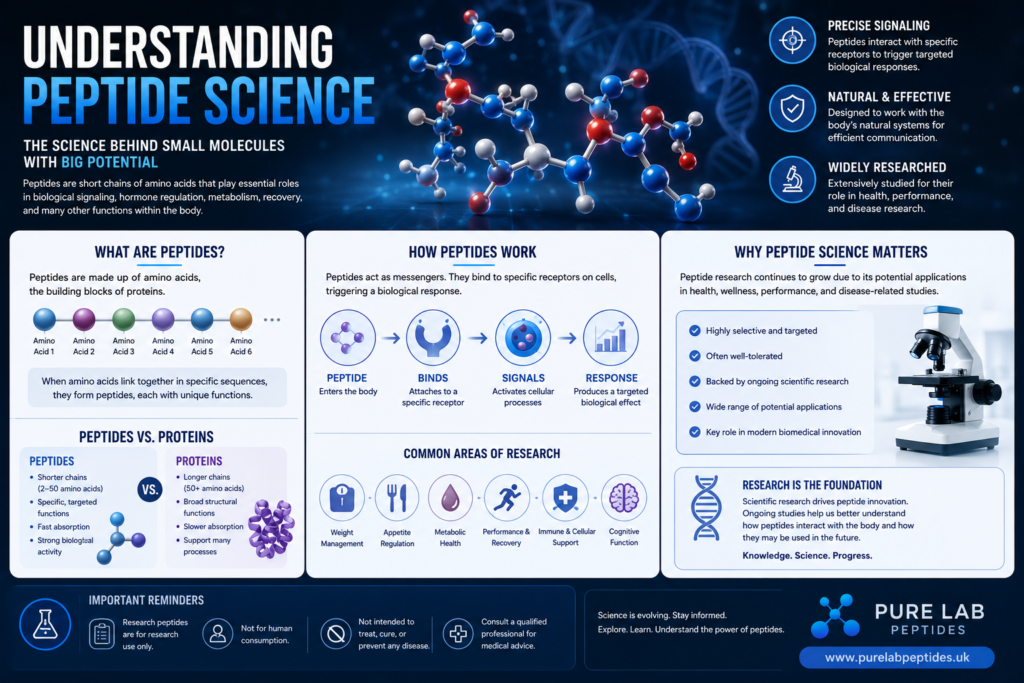
Peptides are short chains of amino acids that act as signaling molecules within the body. They play important roles in many biological processes, including metabolism, appetite regulation, hormone communication, recovery pathways, and cellular signaling. Because peptides naturally occur within the body, researchers continue studying how specific peptide compounds may influence different physiological systems connected to metabolic health and overall biological function. Research Peptides UK
As interest in research peptides UK continues growing, peptide science has expanded from niche laboratory discussions into mainstream wellness and metabolic-health conversations. Researchers and readers are increasingly exploring how peptide pathways interact with appetite signaling, blood sugar regulation, digestion, energy balance, and recovery-related processes. Research Peptides UK
What Weight Loss Research Peptides Are
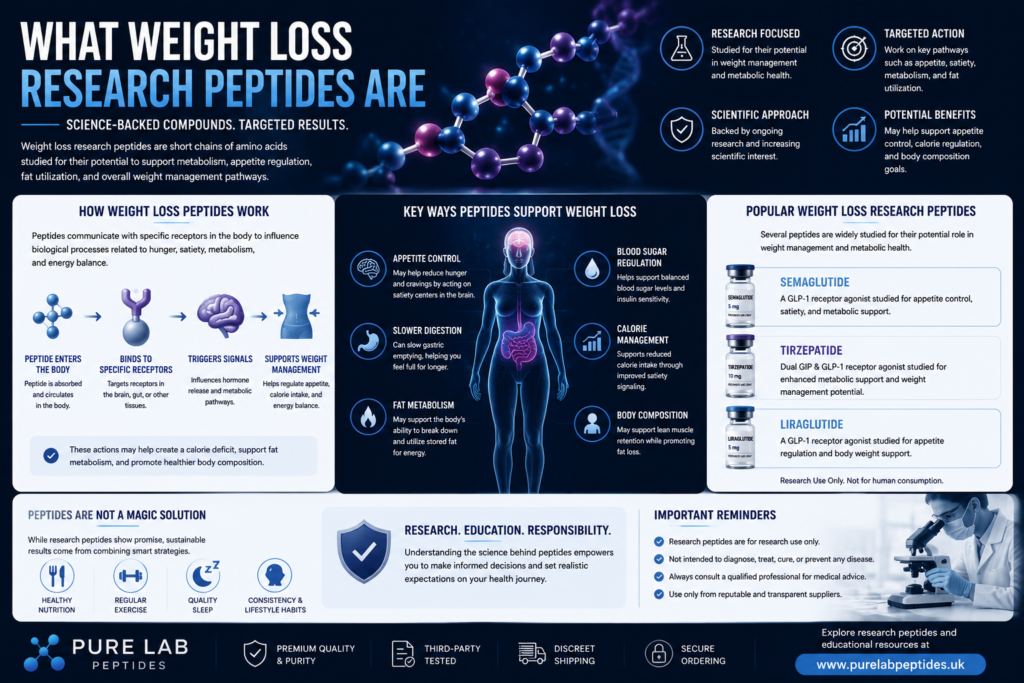
Many of the most discussed research peptides connected to weight management belong to the category of GLP-1 receptor agonists. These compounds are associated with mimicking natural hormones involved in appetite regulation and satiety signaling. Rather than acting like stimulant-based fat burners, GLP-1-related compounds are discussed because of their connection to biological pathways that help regulate hunger and fullness.
Compounds such as semaglutide, tirzepatide, and liraglutide have become central topics in metabolic-health and obesity-related discussions. Researchers continue exploring how these peptides influence appetite behavior, digestion speed, calorie intake, insulin response, and blood sugar regulation. Research Peptides UK
One reason these compounds have gained so much attention is their relationship with satiety signaling. By influencing natural hormonal pathways connected to fullness, certain peptides may help individuals feel satisfied sooner and reduce cravings between meals. Researchers also continue studying how delayed gastric emptying contributes to these appetite-regulation effects. Research Peptides UK
Difference Between Research Peptides & Traditional Supplements
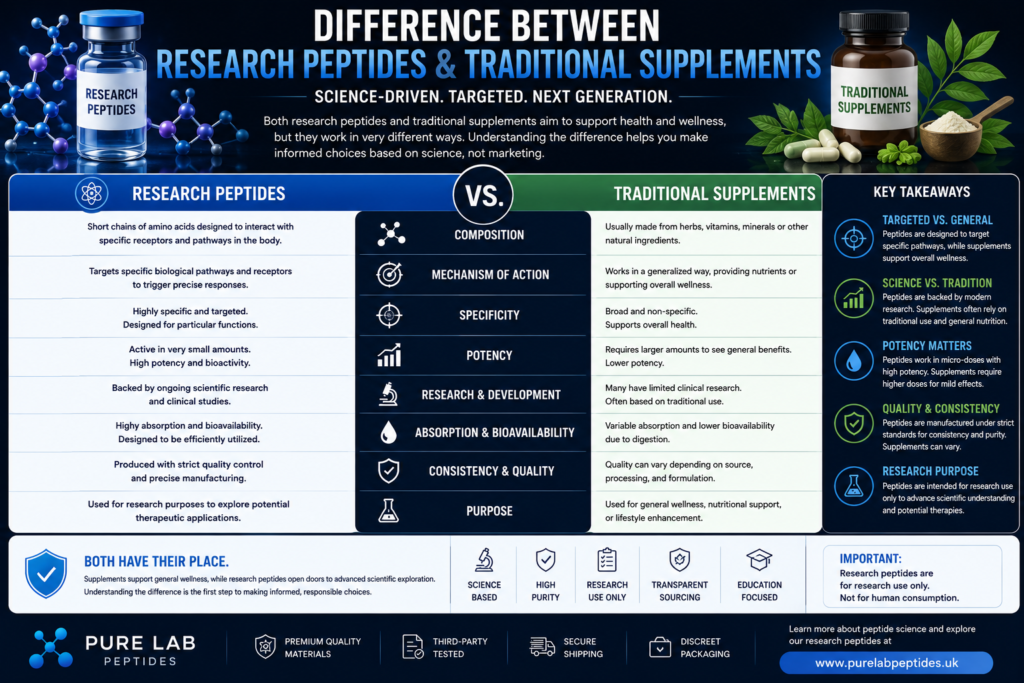
Research peptides differ significantly from traditional stimulant-based supplements. Many conventional fat burners rely heavily on temporary stimulation, increased heart rate, or short-term energy boosts. In contrast, peptide-based compounds are more commonly associated with biological signaling pathways linked to appetite regulation, digestion, and metabolic function.
This scientific approach is one reason peptide research has become increasingly popular within modern wellness and metabolic-health discussions. Instead of focusing solely on temporary energy enhancement, researchers are studying how peptides may support natural physiological systems connected to long-term appetite and metabolic regulation. Research Peptides UK
The growing popularity of GLP-1-related compounds has also helped increase awareness surrounding broader peptide science and research developments across the UK.
Why Research Peptides UK Is Trending
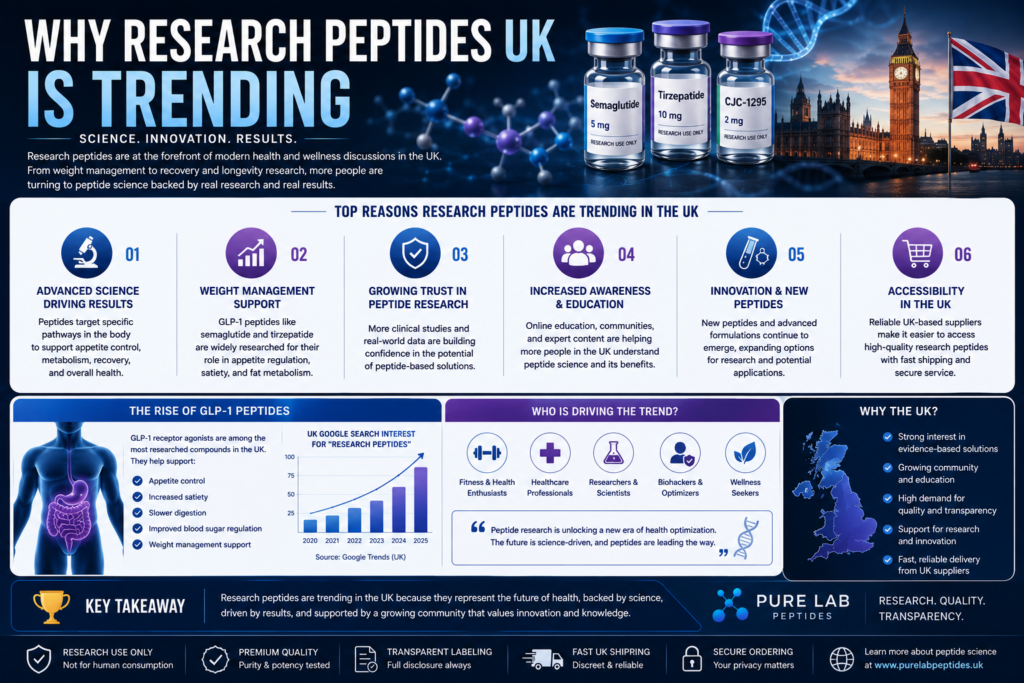
Search interest surrounding research peptides UK has increased rapidly because of growing awareness of peptide science, GLP-1 research, and metabolic-health discussions. Clinical attention surrounding semaglutide and tirzepatide has introduced many people to the broader field of appetite-regulation and obesity-related peptide research.
Public discussions across social media, scientific publications, wellness communities, and educational platforms have also contributed to the increasing popularity of peptide-related searches. More readers are now looking for trustworthy educational resources that explain peptide mechanisms, research developments, and peptide-related biological pathways responsibly. Research Peptides UK
As peptide science continues evolving, demand for transparent educational content and research-focused peptide suppliers is expected to continue growing throughout the UK.
For readers interested in learning more about modern peptide science, Pure Lab Peptides provides research-focused peptide information, educational resources, and peptide product listings connected to current developments within the UK peptide market.
Appetite Regulation Pathways
One of the most discussed aspects of modern peptide science is how certain research peptides influence appetite-regulation pathways. Many compounds connected to weight-management discussions belong to the GLP-1 receptor agonist category, which mimics natural hormones released after eating. These hormones help communicate feelings of fullness to the brain and may reduce cravings and hunger between meals. Research Peptides UK
Researchers continue studying how GLP-1-related compounds interact with biological signaling systems connected to satiety and calorie intake. Rather than functioning like traditional stimulant-based products, these peptides are associated with supporting natural appetite-regulation mechanisms within the body.
Compounds such as semaglutide and tirzepatide have gained strong attention because of their relationship to these hunger-signaling pathways. Their growing visibility has significantly contributed to increasing interest in research peptides UK and modern metabolic-health discussions.
Slower Gastric Emptying
Another major mechanism associated with GLP-1-related peptides is delayed gastric emptying. Gastric emptying refers to how quickly food leaves the stomach after meals. Certain peptides slow this digestive process, meaning food remains in the stomach longer before moving through the digestive system. Research Peptides UK
Because digestion occurs more slowly, feelings of fullness may last longer throughout the day. This extended satiety effect is one reason appetite-regulation peptides are frequently discussed in obesity and metabolic-health research conversations. Researchers continue studying how delayed digestion may contribute to reduced calorie intake and appetite-related behavior changes. Research Peptides UK
This mechanism has become one of the key reasons compounds such as semaglutide and tirzepatide are central topics within modern peptide science.
Blood Sugar & Metabolic Function
Research peptides are also widely discussed in relation to insulin signaling, glucose management, and metabolic efficiency. GLP-1 pathways influence how the body responds to food intake by supporting insulin release and helping regulate blood sugar levels after meals.
Researchers continue exploring how these metabolic effects may influence appetite behavior, energy utilization, and fat-storage pathways. More stable blood sugar regulation may help reduce sudden hunger spikes and energy fluctuations that can contribute to overeating. Research Peptides UK
As public awareness surrounding metabolic-health research continues expanding, many individuals searching for research peptides UK are specifically interested in educational information related to peptide signaling pathways connected to metabolism and appetite control.
Dual-Action Peptide Mechanisms
One reason tirzepatide has attracted especially strong scientific attention is because of its dual-action mechanism involving both GLP-1 and GIP pathways. Most traditional GLP-1 compounds focus mainly on appetite-regulation signaling, while tirzepatide interacts with multiple hormonal pathways connected to metabolism and glucose regulation. Research Peptides UK
Researchers believe this dual-action mechanism may contribute to stronger appetite-regulation and metabolic-support effects compared to compounds targeting only GLP-1 pathways. This has made tirzepatide one of the most discussed research peptides within obesity and metabolic-health conversations. Research Peptides UK
The increasing visibility of advanced peptide signaling pathways has helped fuel broader interest in peptide science across the UK. As research continues evolving, more readers are seeking educational resources explaining how modern peptide compounds interact with biological systems connected to appetite, digestion, and metabolic function.
For readers interested in learning more about peptide science, research-focused educational resources, and peptide product information, Pure Lab Peptides provides content connected to modern developments within the growing UK peptide industry.
Semaglutide Research & Clinical Discussions
Semaglutide is currently one of the most recognized compounds within modern peptide science and metabolic-health research. It belongs to the GLP-1 receptor agonist category and has gained widespread attention because of clinical discussions surrounding appetite regulation, satiety signaling, and long-term weight-management support.
Researchers believe semaglutide’s popularity is closely linked to its ability to influence hunger pathways connected to fullness and digestion. By supporting biological signaling associated with satiety, semaglutide has become one of the most discussed research peptides within obesity and metabolic-health conversations.
The growing visibility of semaglutide has significantly contributed to increasing public interest in research peptides UK, especially among readers exploring educational resources connected to appetite-regulation science and GLP-1-related pathways.
Tirzepatide Research & Weight Management
Tirzepatide has emerged as another major focus within peptide-related metabolic-health discussions. Unlike semaglutide, which primarily targets GLP-1 pathways, tirzepatide acts on both GLP-1 and GIP receptors. This dual-action mechanism has attracted strong scientific interest because researchers believe it may provide broader metabolic-support effects.
Clinical discussions surrounding tirzepatide frequently highlight its growing role in obesity and appetite-regulation research. Its combined hormonal signaling pathways have helped position tirzepatide as one of the most advanced and widely discussed peptide compounds currently associated with metabolic-health science.
As awareness surrounding dual-action peptide mechanisms continues expanding, tirzepatide has quickly become one of the most searched research peptides within the UK peptide market.
Liraglutide & Other GLP-1 Compounds
Liraglutide is another established GLP-1-related peptide frequently associated with appetite-regulation and metabolic-health discussions. Although it is generally considered more moderate in average outcomes compared to semaglutide and tirzepatide, liraglutide remains an important part of the evolution of peptide-based metabolic research.
One commonly discussed difference involves dosing frequency, as liraglutide is often associated with more frequent administration schedules compared to newer weekly GLP-1 compounds. Despite this, it continues to play a significant role within appetite-regulation and obesity-related peptide discussions.
Beyond clinically recognized GLP-1 compounds, many other substances are marketed online under labels such as “fat-loss peptides” or metabolic enhancers. However, many of these products lack the same level of strong scientific evidence associated with semaglutide, tirzepatide, and liraglutide.
Understanding Evidence-Based Peptide Research
As interest in research peptides UK continues growing, distinguishing evidence-based peptide discussions from speculative marketing claims has become increasingly important. Clinically recognized GLP-1-related therapies undergo extensive scientific evaluation, clinical testing, and regulatory review before receiving approval for medical use.
In contrast, many research-use peptides sold online may not have undergone the same level of long-term clinical validation or regulatory oversight. This is why responsible peptide education should clearly separate research compounds from approved pharmaceutical therapies while avoiding unrealistic claims or misleading medical promises.
Transparency, educational value, and evidence-based information are becoming increasingly important within the growing peptide industry. Readers searching for peptide-related information are often looking for trustworthy educational resources that explain peptide mechanisms responsibly while helping them better understand modern developments within peptide science.
For readers interested in exploring research-focused peptide information and educational resources further, Pure Lab Peptides provides peptide-related content connected to current developments within the UK peptide market.
Commonly Discussed Side Effects
Although research peptides have become increasingly popular within metabolic-health and appetite-regulation discussions, it is important to understand that certain compounds may also be associated with side effects and digestive-related discomfort. Many GLP-1-related peptides are frequently discussed in connection with gastrointestinal symptoms because of how they influence digestion speed and appetite signaling.
Some of the most commonly mentioned side effects include nausea, bloating, stomach discomfort, vomiting, constipation, diarrhea, and reduced appetite. These effects are often associated with delayed gastric emptying and changes in digestive function. Individual responses may vary depending on dosage, tolerance, overall health condition, and the specific peptide involved.
As public interest in research peptides UK continues expanding, the importance of accurate educational information surrounding side effects and responsible peptide discussions has become increasingly important.
Importance of Responsible Research
Responsible peptide research involves understanding both the scientific interest surrounding peptide compounds and the limitations associated with research-use products. Clinically recognized therapies linked to GLP-1 pathways are generally intended for use under professional medical supervision when prescribed for approved treatment purposes.
Researchers and readers exploring peptide science should avoid relying entirely on social media claims or aggressive marketing language when evaluating peptide-related information. Educational transparency and evidence-based discussions remain essential as the peptide market continues growing across the UK.
Monitoring, dosage considerations, digestive responses, and long-term metabolic-health discussions are all important aspects of responsible peptide-related education. Understanding how peptide compounds interact with biological signaling systems can help readers better navigate modern peptide science responsibly.
Lifestyle Factors Still Matter
One of the most important points emphasized within obesity and metabolic-health discussions is that peptide-related approaches are generally associated with broader lifestyle management rather than functioning as standalone solutions. Healthy nutrition, calorie control, physical activity, sleep quality, and long-term consistency continue to play major roles in sustainable weight management.
Even the most discussed GLP-1-related compounds, such as semaglutide and tirzepatide, are frequently associated with lifestyle-focused approaches involving balanced nutrition and regular activity. Appetite regulation alone may not address all aspects of long-term metabolic health without healthier behavioral habits and consistency over time.
This distinction is important because many online discussions incorrectly portray peptides as effortless or instant solutions. Responsible peptide education should emphasize realistic expectations and evidence-based discussions connected to long-term wellness and metabolic-health strategies.
Research-Only Peptides vs Approved Medicines
As interest in research peptides UK continues expanding, understanding the difference between research-use compounds and approved pharmaceutical therapies has become increasingly important. Clinically recognized medications undergo extensive scientific review, regulatory evaluation, and long-term safety testing before receiving approval for medical use.
In contrast, many peptides sold online are categorized as research-use products and may not carry the same level of regulatory validation or clinical evidence. Responsible suppliers should clearly identify research-focused products while avoiding unsupported medical claims or misleading therapeutic promises.
Transparency has become one of the most important factors within the growing peptide industry. Readers increasingly look for educational platforms and peptide suppliers that provide accurate information, research-focused discussions, and responsible explanations surrounding peptide science.
For readers interested in learning more about peptide science, research-focused educational resources, and peptide-related product information, Pure Lab Peptides provides content connected to modern developments within the UK peptide market.
Increased Awareness of GLP-1 Research
One of the biggest reasons interest in research peptides UK has grown so rapidly is the increasing awareness surrounding GLP-1-related peptide research. Over the past few years, compounds such as semaglutide and tirzepatide have received significant attention across scientific publications, wellness discussions, online health communities, and mainstream media platforms.
As more people learn about appetite-regulation pathways and metabolic-health research, public curiosity surrounding peptide science continues expanding. Many readers are now exploring how GLP-1-related compounds interact with biological systems connected to hunger signaling, digestion, blood sugar regulation, and satiety.
The growing visibility of obesity and metabolic-health discussions has also helped shift attention toward science-driven approaches involving peptide signaling pathways rather than relying solely on traditional stimulant-based supplements.
Expansion of Peptide Education Communities
Another major reason research peptides UK continues trending is the rapid growth of peptide education communities and scientific discussions online. Researchers, wellness enthusiasts, educational platforms, and peptide-focused communities are now discussing peptide science more frequently than ever before.
Scientific articles, educational blogs, podcasts, forums, and research discussions have helped introduce broader audiences to topics involving GLP-1 signaling, metabolic-health pathways, recovery-related peptides, and appetite-regulation science.
This increased exposure has transformed peptide science from a niche laboratory subject into one of the fastest-growing educational topics within modern wellness and metabolic-health discussions. More readers are actively searching for trustworthy educational resources explaining peptide mechanisms, research developments, and responsible peptide-related information.
Demand for UK-Based Research Peptide Suppliers
The rapid growth of peptide science has also created increasing demand for UK-based research peptide suppliers. Many readers and researchers prefer UK-focused suppliers because of faster shipping, localized support, easier communication, and access to educational resources tailored to the UK peptide market.
Transparency and professionalism have become especially important within the growing peptide industry. Readers frequently look for suppliers that provide research labeling, educational content, product transparency, and responsible communication rather than relying on exaggerated marketing claims.
Searches related to research peptides UK often reflect a desire for trustworthy educational resources and peptide-focused platforms that understand the UK market. As awareness surrounding peptide science continues growing, suppliers focused on transparency and educational value are becoming increasingly important within the industry.
For readers interested in exploring peptide science further, Pure Lab Peptides provides research-focused peptide information, educational resources, and peptide product listings connected to modern developments within the growing UK peptide market.
What to Look for in a Peptide Supplier
As interest in research peptides UK continues growing, choosing a reliable peptide supplier has become increasingly important. The rapid expansion of the peptide market has introduced many online platforms and research-focused stores, but not all suppliers provide the same level of transparency, educational support, or professional standards.
One of the most important factors to look for is clear product information and transparent communication. Reliable suppliers should provide detailed descriptions, research labeling, storage guidance, and educational content that helps readers better understand peptide science and product categories.
Professional presentation and responsible communication also play major roles in establishing trust within the peptide industry. Educational resources, research-focused discussions, and evidence-based information often help distinguish reliable peptide suppliers from websites relying heavily on unrealistic marketing claims.
Importance of Educational Content
Educational peptide content has become one of the most valuable parts of the growing peptide industry. As more individuals search for research peptides UK, many are not only looking for products but also trying to understand appetite-regulation pathways, metabolic-health research, GLP-1 science, and peptide-related biological mechanisms.
High-quality educational resources help readers better distinguish between clinically recognized compounds such as semaglutide and tirzepatide and substances that may lack strong scientific evidence. Responsible peptide discussions should focus on transparency, realistic expectations, and research-focused information rather than exaggerated claims.
Blog articles, educational guides, FAQs, and peptide science discussions are becoming increasingly important for helping readers navigate modern peptide research responsibly.
Transparency & Research Standards
Transparency surrounding research-use products, sourcing discussions, educational information, and product presentation has become one of the strongest indicators of professionalism within the peptide market. Readers increasingly prefer suppliers that clearly explain research-focused categories while avoiding unsupported medical promises.
As the peptide industry continues evolving, many individuals searching for research peptides UK are looking for suppliers that prioritize educational value, professional communication, and responsible product information.
Quality-focused presentation standards, research labeling, and evidence-based educational discussions all contribute to stronger trust within the growing peptide industry. Readers often value suppliers that focus on helping users better understand peptide science instead of relying purely on aggressive promotional language.
Why Researchers Explore Pure Lab Peptides
For readers interested in exploring modern peptide science further, Pure Lab Peptides provides research-focused peptide information, educational resources, and peptide product listings connected to current developments within the UK peptide market.
The platform offers peptide-related educational content surrounding GLP-1 compounds, appetite-regulation pathways, metabolic-health discussions, and broader peptide science topics. Readers interested in learning more about research peptides UK can explore informational resources designed to support transparency and peptide-focused education.
As awareness surrounding peptide science continues expanding, educational platforms focused on responsible communication and research-oriented information are becoming increasingly valuable within the growing UK peptide community.
GLP-1 Research Peptides
GLP-1-related compounds are currently among the most discussed categories within modern peptide science. Interest in these research peptides has expanded rapidly because of their connection to appetite regulation, satiety signaling, digestion, and metabolic-health discussions.
Compounds such as semaglutide and tirzepatide have become central topics within obesity and weight-management research because of their growing visibility in clinical and metabolic-health conversations. Researchers continue studying how GLP-1 receptor agonists interact with biological pathways connected to hunger signaling, calorie intake, and blood sugar regulation.
Tirzepatide has attracted especially strong attention because of its dual-action mechanism involving both GLP-1 and GIP pathways. This advanced signaling approach has helped position it as one of the most discussed compounds within modern peptide research.
As awareness surrounding appetite-regulation science continues increasing, many individuals searching for research peptides UK are specifically interested in educational information connected to GLP-1-related metabolic pathways.
Metabolic Research Peptides
Beyond GLP-1 compounds, there is also growing interest in peptides connected to broader metabolic-health research. These peptides are commonly discussed in relation to insulin signaling, glucose regulation, energy metabolism, and appetite-related biological pathways.
Researchers continue exploring how peptide signaling may influence long-term metabolic processes and overall energy balance. Public awareness surrounding metabolic-health science has expanded significantly in recent years, leading more individuals to explore peptide-focused educational resources and research discussions.
The increasing popularity of metabolic-health topics has helped transform peptide science into one of the fastest-growing areas within modern wellness and biological research conversations.
Recovery & Wellness Research Peptides
While appetite-regulation peptides receive significant public attention, peptide science extends far beyond metabolic-health discussions alone. Researchers also explore compounds connected to recovery-related pathways, tissue-support discussions, cellular signaling, and broader wellness-related research topics.
Certain peptides are commonly discussed in relation to muscle recovery, connective tissue research, skin-related studies, and biological repair pathways. This broader scientific interest has contributed heavily to the rapid expansion of peptide education and research communities across the UK.
As searches for research peptides UK continue rising, many readers are exploring peptide science not only for appetite-regulation discussions but also for wider educational interest surrounding biological signaling systems and peptide-related research developments.
For readers interested in learning more about peptide science, research-focused educational resources, and peptide product information, Pure Lab Peptides provides content connected to current developments within the growing UK peptide market.
What are research peptides?
Research peptides are short chains of amino acids studied for their potential roles in biological signaling, metabolism, appetite regulation, recovery pathways, and hormone-related functions. Many modern peptide discussions focus on GLP-1-related compounds connected to appetite and metabolic-health research.
How do GLP-1 peptides work?
GLP-1-related peptides mimic natural hormones involved in hunger regulation and digestion. They are commonly associated with supporting satiety signaling, reducing cravings, slowing gastric emptying, and influencing blood sugar regulation pathways connected to metabolic-health discussions.
What are the most popular research peptides?
Some of the most widely discussed research peptides currently include semaglutide, tirzepatide, and liraglutide. These compounds have gained strong attention within appetite-regulation and obesity-related research conversations because of their association with GLP-1 pathways.
What is the difference between semaglutide and tirzepatide?
Semaglutide primarily targets GLP-1 receptors connected to appetite regulation and satiety signaling. Tirzepatide acts on both GLP-1 and GIP pathways, which is one reason it has attracted significant scientific attention in metabolic-health and weight-management discussions.
Are research peptides approved medicines?
Not necessarily. Many peptides sold online are categorized as research-use compounds and may not have undergone the same level of regulatory review, safety evaluation, or clinical testing as approved pharmaceutical therapies. Responsible educational content should clearly distinguish research compounds from approved medications.
What side effects are commonly discussed?
Commonly discussed side effects associated with GLP-1-related peptides may include nausea, bloating, stomach discomfort, constipation, diarrhea, vomiting, and reduced appetite. Individual responses may vary depending on the specific compound and overall health profile.
Why are research peptides becoming so popular?
Research peptides have become increasingly popular because of growing public awareness surrounding appetite regulation, metabolic-health research, GLP-1 science, and obesity-related discussions involving compounds such as semaglutide and tirzepatide.
Do peptides replace diet and exercise?
No. Most evidence-based discussions surrounding peptide science emphasize that healthy nutrition, physical activity, sleep quality, and long-term lifestyle consistency remain essential components of sustainable metabolic health and weight-management strategies.
What should I look for in a peptide supplier?
A reliable peptide supplier should provide transparent product information, research labeling, educational content, professional communication, and responsible peptide-related discussions. Transparency and educational value are becoming increasingly important within the growing research peptides UK market.
Where can I learn more about research peptides UK?
Readers interested in peptide science, research-focused peptide information, and educational resources can explore Pure Lab Peptides for additional content connected to modern developments within the UK peptide industry.
Final Thoughts on Research Peptides UK
Interest in research peptides UK continues to grow as peptide science becomes increasingly visible within metabolic-health, appetite-regulation, and wellness-related research discussions. Compounds such as semaglutide and tirzepatide have helped bring significant public attention to GLP-1-related pathways because of their strong association with appetite signaling, digestion, and long-term metabolic-health conversations.
Unlike traditional stimulant-based approaches, many modern research peptides are connected to biological signaling systems that influence hunger, satiety, blood sugar regulation, and digestion. This science-driven approach has helped position peptide research as one of the fastest-growing areas within modern wellness and obesity-related discussions.
At the same time, responsible peptide education remains extremely important. Not every peptide marketed online has undergone the same level of clinical testing, scientific validation, or regulatory review. Readers exploring peptide science should understand the difference between research-use compounds and approved pharmaceutical therapies while focusing on evidence-based educational resources.
As awareness surrounding peptide science continues expanding, transparency, educational value, and responsible communication are becoming increasingly important within the growing UK peptide industry. Readers searching for research peptides UK are often looking not only for product information but also for trustworthy educational content explaining peptide mechanisms, appetite-regulation pathways, metabolic-health discussions, and ongoing scientific developments.
The future of peptide science is expected to continue evolving as researchers explore advanced metabolic pathways, dual-action peptide mechanisms, recovery-related compounds, and broader biological signaling systems connected to wellness and metabolic function.
For readers interested in exploring peptide science further, Pure Lab Peptides provides research-focused peptide information, educational resources, and peptide product listings connected to modern developments within the growing UK peptide market.
What are research peptides used for?
Research peptides are studied for their potential roles in biological signaling, metabolism, appetite regulation, recovery pathways, and hormone-related functions. Many modern discussions surrounding research peptides UK focus on GLP-1 compounds connected to appetite-control and metabolic-health research.
How do GLP-1 research peptides work?
GLP-1-related peptides mimic natural hormones involved in satiety and digestion. These compounds are commonly associated with supporting appetite regulation, slowing gastric emptying, reducing cravings, and influencing blood sugar management pathways.
What are the most popular research peptides in the UK?
Some of the most discussed research peptides in the UK include semaglutide, tirzepatide, and liraglutide. These compounds have gained strong attention because of their growing role in appetite-regulation and obesity-related research discussions.
What is the difference between semaglutide and tirzepatide?
Semaglutide mainly targets GLP-1 receptors connected to appetite signaling and digestion. Tirzepatide acts on both GLP-1 and GIP pathways, which is one reason it has attracted significant scientific interest within metabolic-health and weight-management research.
Are research peptides legal in the UK?
Certain peptide-based medications may legally be prescribed in the UK under professional medical supervision for approved uses. However, many products sold online are categorized as research-use compounds rather than approved pharmaceutical therapies.
What side effects are commonly discussed with GLP-1 peptides?
Some commonly discussed side effects include nausea, bloating, constipation, diarrhea, stomach discomfort, vomiting, and reduced appetite. Individual responses may vary depending on the specific compound and overall health profile.
Why are research peptides becoming so popular?
Research peptides UK has become a rapidly growing topic because of increasing public awareness surrounding GLP-1 science, metabolic-health discussions, appetite-regulation pathways, and obesity-related peptide research involving compounds such as semaglutide and tirzepatide.
Do research peptides replace diet and exercise?
No. Most evidence-based peptide discussions emphasize that healthy nutrition, regular physical activity, sleep quality, and long-term lifestyle consistency remain essential components of sustainable metabolic-health and weight-management strategies.
What should I look for in a research peptide supplier?
A reliable peptide supplier should provide transparent product information, research labeling, educational resources, professional communication, and evidence-based peptide discussions. Transparency and educational value are becoming increasingly important within the growing UK peptide market.
Where can I learn more about research peptides UK?
Readers interested in peptide science, educational resources, and research-focused peptide information can explore Pure Lab Peptides for additional content connected to modern developments within the UK peptide industry.